What changes for you
You stop having to ask whether you could leave.
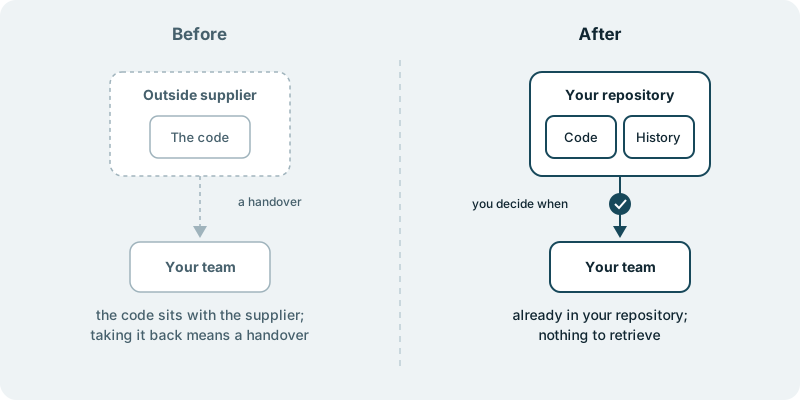
Leaders often avoid outside help for one reason: the day it ends. A handover that takes months, a knowledge gap that only the supplier can close, a codebase that nobody else can open. So the real decision is made quietly, and the product stays wherever it happens to be.
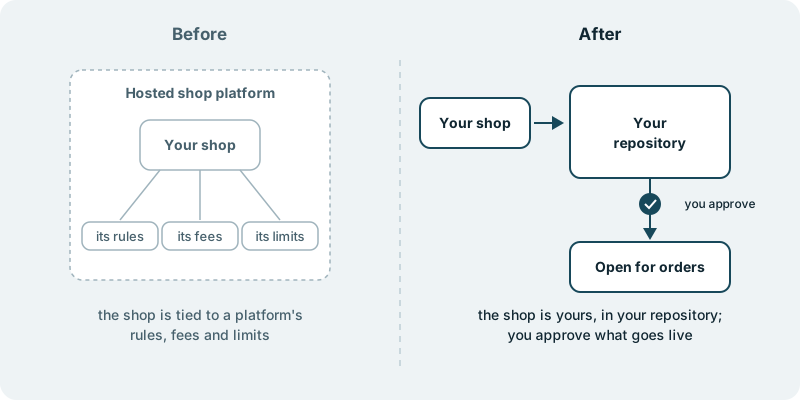
Here the question is already answered. Everything done for you sits in a repository you control, and the code is yours. Moving the work to your own team is a decision you take, not a project you survive.
When this question comes up
It rarely arrives as a crisis. A new engineering lead joins and wants to own the product’s direction. A budget cycle changes what you can spend on outside help. A hiring plan finally comes through, and the team that was missing last year now exists. Or you simply want to know that you could leave tomorrow, so that staying is a choice and not a habit.
In each case the worry is the same: will the product still be understood by the people who inherit it? The answer here is that they have been able to read every change as it happened, in the place they already work.
What you decide
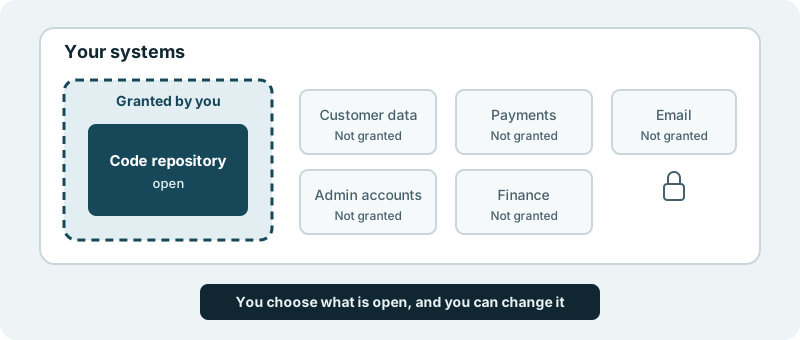
You decide when your team takes over, and how much of it. All of it, one product out of several, or only the day-to-day upkeep are different choices, and each is open to you.
You decide whether it is a clean break or a gradual one. Your own team can work with Zefana too: set the priorities, follow the progress and approve what ships. Some leaders prefer to share the work for a while before stepping back. That is yours to set, and yours to change.
You decide the order of things. If your team wants to start with the part of the product it knows best, that is where it starts.
What you see along the way
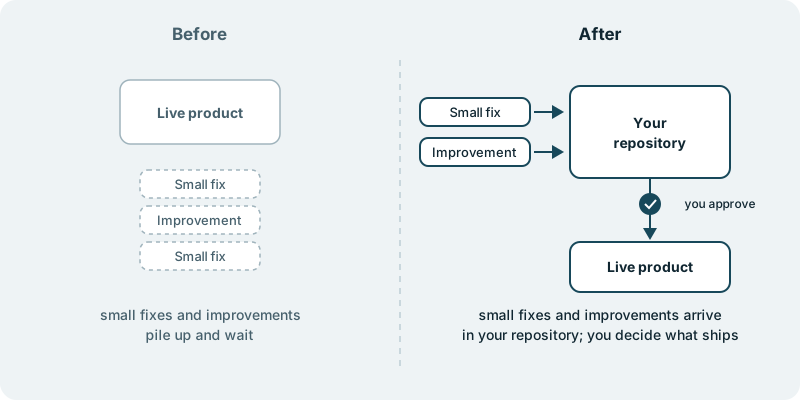
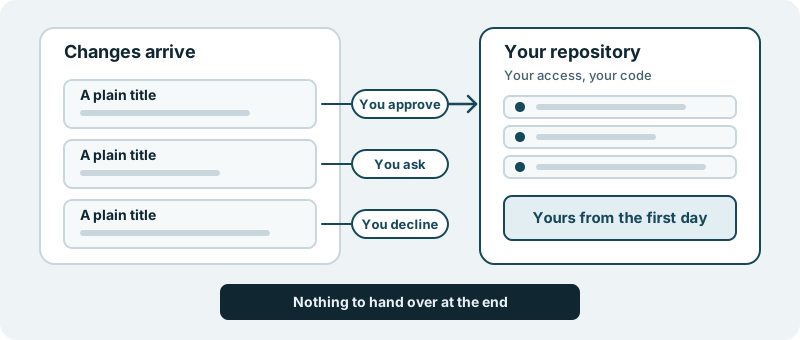
You see the same thing your team will inherit. Changes arrive in your repository in small pieces that you can read, each with a plain account of what it does and why. By the time your team opens the history, it has been in front of you for as long as we have worked together.
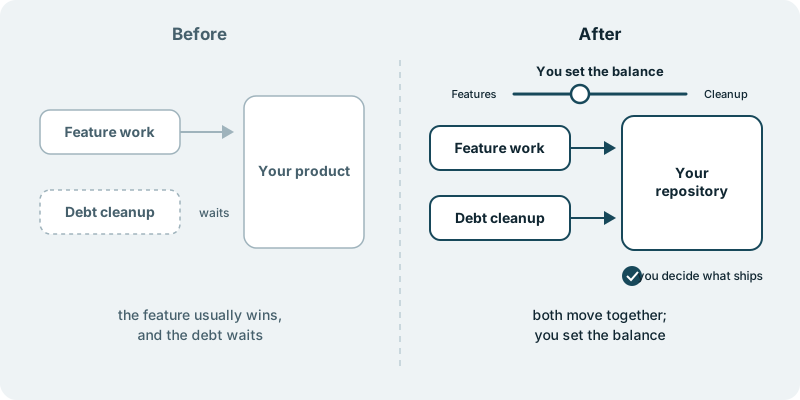
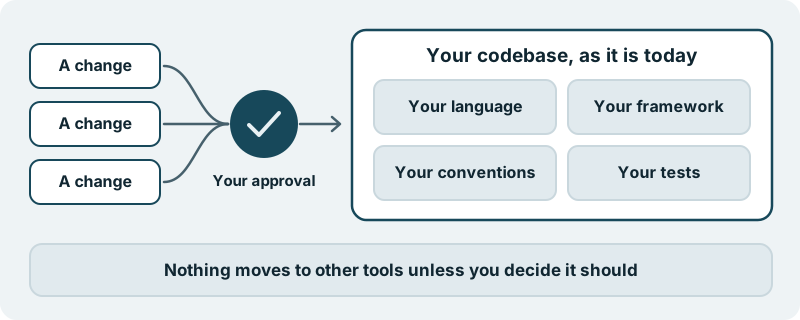
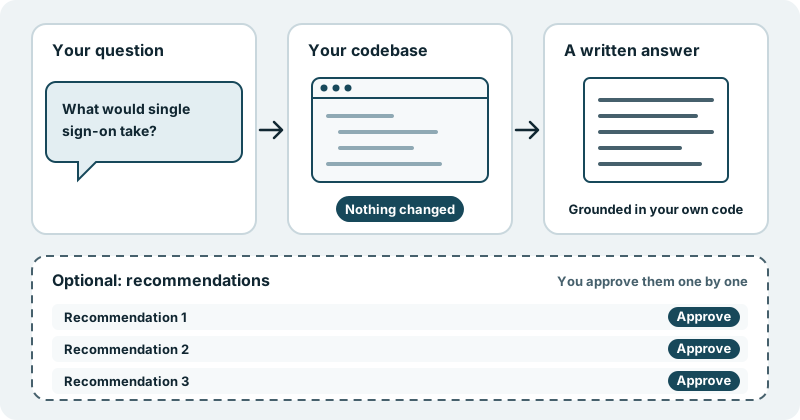
You see what is coming next, and you can reorder it. Nothing reaches your users without your approval, and that stays true whoever is doing the work.
How we work stays our own business. What stays visible to you is every change, before it goes live.
What your team gets on the day
Your team gets a product they can open. The code sits in your repository, the history reads in plain words, and nobody has to wait for access, an export or a favour.
Your team also keeps the option of calling us again. Handing the work back is not a goodbye. If your team’s plate fills up next year, a conversation is all it takes to share the work again, in whichever of the two ways suits you then.
What it costs you in time
A conversation about what your team would take on, and a read of the history it will pick up. There is no special preparation to schedule, because nothing has to be gathered or exported first.
If your team is not ready yet
Sometimes the wish to take over comes before the team is fully in place. That is fine. Work can continue in the meantime, and your people can follow each change as it arrives, so that the day they take over, little of it is new to them.
What if you want to stop
You can stop at any point. Your code and your product stay yours to take anywhere, and whatever has been done is already in your repository. The day you step away looks like any other day, except that the next change comes from someone else.
Starting small
We have not published a delivered example of this situation, so we will not claim one. What we can do is talk through what your team would pick up, and begin with a small first piece so that you see how the work arrives in your repository before you commit to more. Every engagement is tailored to your product and your goals, and it starts with a conversation.
If the thought of leaving is what holds you back from starting, tell us which part of the product you would want your team to own first.