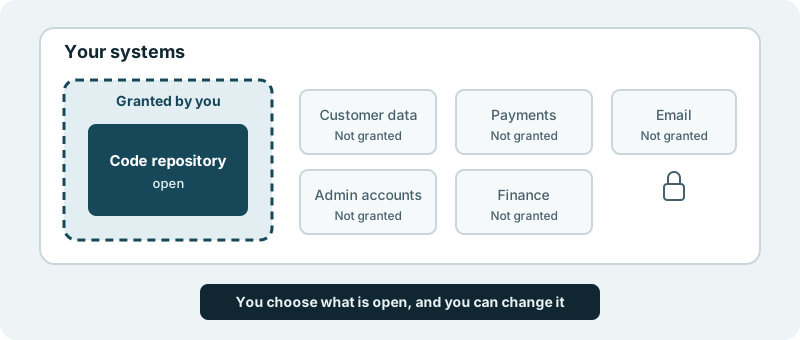
You decide which parts of your systems are open to the work. Everything else stays closed. We work within the access you grant, and nothing more.
What you get
A default that starts at the smallest opening, not the largest.
Bringing in outside help often begins with a request for broad access, granted in a hurry so the work can start. Months later, nobody quite remembers what was opened or why. That is the access your security team worries about, and they are right to.
Here the posture runs the other way. You start with the least that lets real work arrive, and you widen it only when a piece of work needs more and you agree. The work lands in your own code repository. Your customer data, your payment accounts and your inboxes are not part of the deal unless you make them part of it.
Three things follow for you.
A short answer for your security team. What is open, who opened it and why fit on one page, because you made each choice yourself.
A smaller surface to worry about. A system that was never opened is a system you do not have to review.
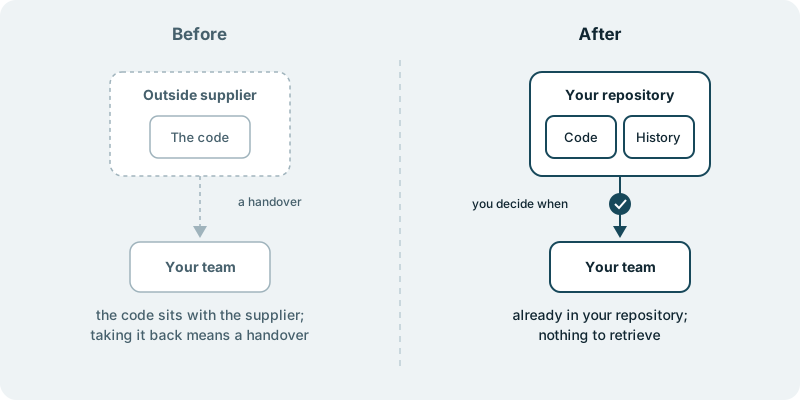
Control that sits on your side. The access lives in your systems. Changing it is your call and needs nobody’s permission.
What it looks like in practice
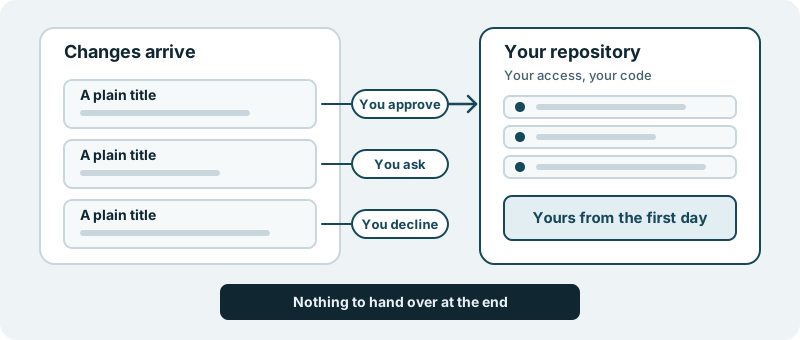
Say your first piece of work is a change to the sign-up flow. You open the code repository, and only that. The change arrives there as something your team can read. You decide what ships. Nothing reaches your users without your approval.
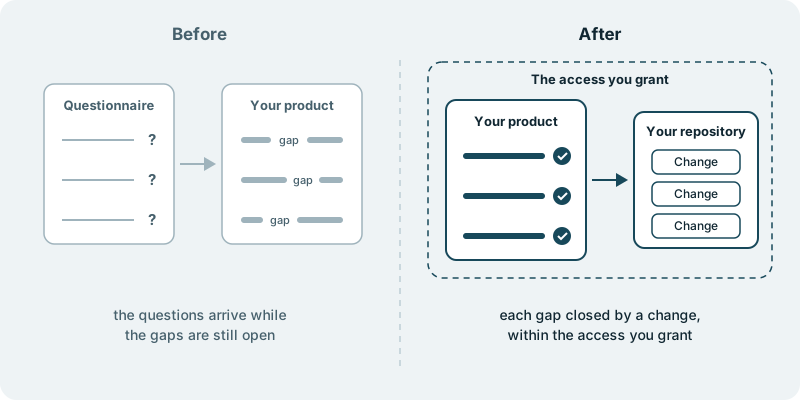
A few weeks later the next piece touches how invoices are sent. If it needs more than the repository, that is access only you can grant. You might grant it, narrow it, or decide the work can wait. Each answer is a fine answer.
For a technical leader, this means access you can explain in a review without digging through old messages. For a product leader, it means outside help that does not quietly become an open door. And for whoever signs off on risk, it means a list that only grows when someone on your side chooses to grow it.
What it is not
It is not a certificate or an audit, and it does not replace your own security practice. It is a promise about our side of the line: the boundary you set is the boundary we keep.
Start with one small piece of work and the least access it needs, and judge the result before you open anything more.