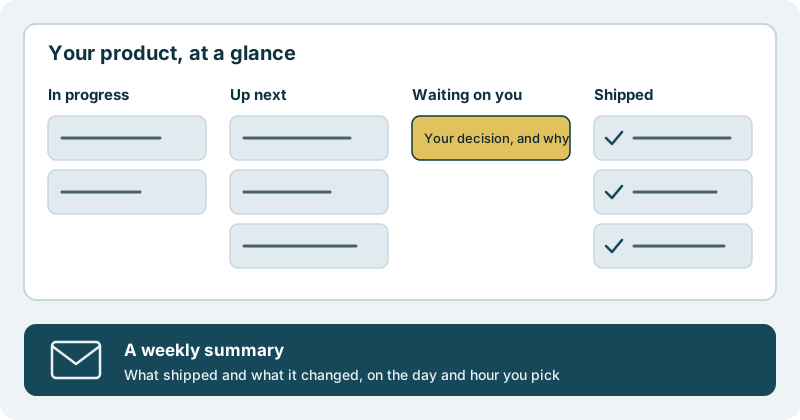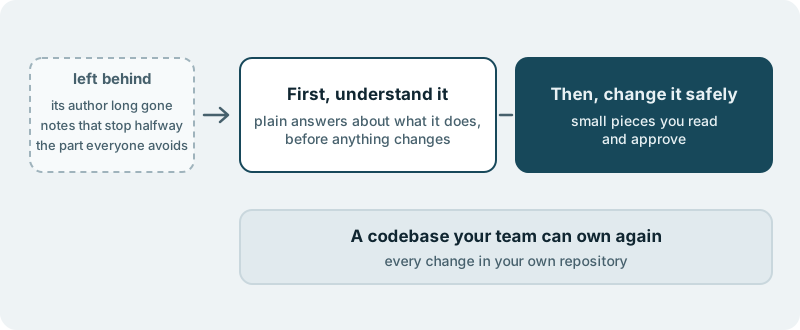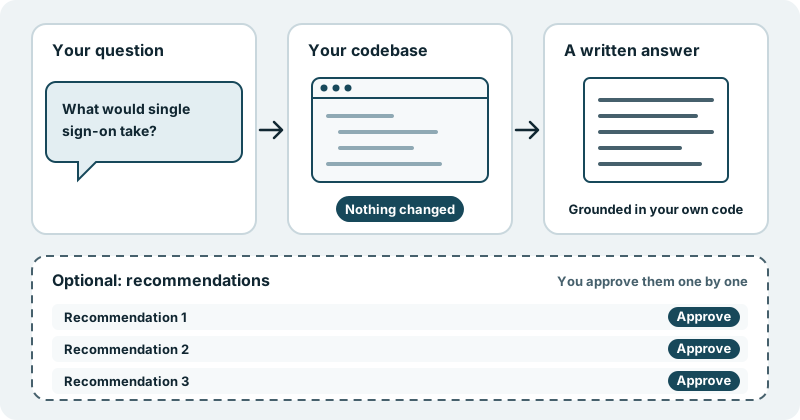
You can ask a plain question about your product and get a written answer grounded in your own code. Nothing in the code is changed by asking. If you want more than an answer, you can also get recommendations and approve them one at a time.
What you get
A straight answer to the question you actually have, in words you can take into your next meeting.
It is about your product, not products in general. A generic article can tell you what single sign-on usually involves. The answer you get is grounded in your own code: where sign-in lives today, what it already supports, and what stands between you and the thing you asked about.
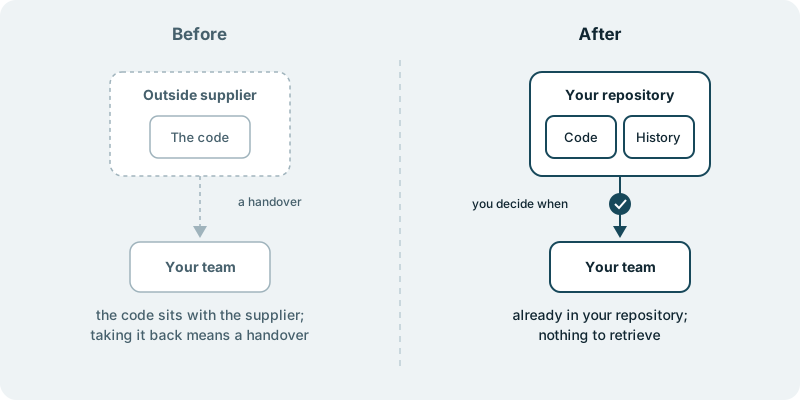
Nothing moves while you ask. Asking is not the first step of a project. Your code stays as it was, no change waits for review, and nobody’s plans shift because you were curious. That makes it safe to ask the question you are slightly embarrassed not to know the answer to.
Recommendations, if you want them
Some questions are really requests for advice. “How should we approach single sign-on?” deserves more than a description of what exists. For those, you can ask for researched recommendations: concrete options for your product, in order of priority, each with the reasons behind it.
You approve them one by one. You might approve the first, set the second aside for next quarter, and decline the third because it does not fit your plans. Each choice is separate, so agreeing to one recommendation never commits you to the others.
What it is not
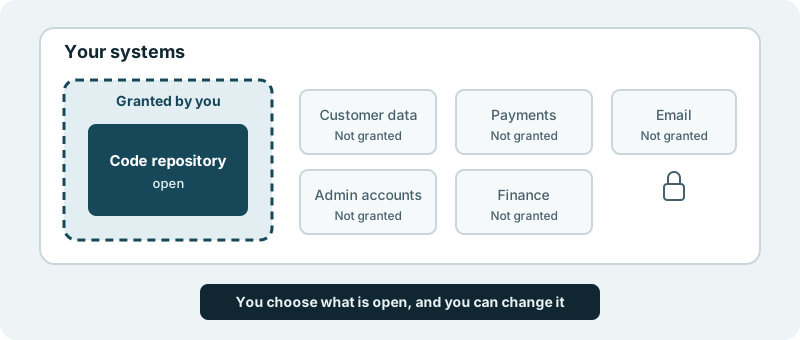
It is not a promise about any change you have not approved. You decide what ships. Nothing reaches your users without your approval. An answer also reaches only as far as the access you have granted. We work within the access you grant, and nothing more.
What it looks like in practice
Picture a head of product at a growing software company. A large prospect has asked, late in a sales conversation, whether the product supports single sign-on. It does not, and the sales team wants to know whether to promise it.
Instead of pulling an engineer off a release, the head of product asks, in one sentence, what single sign-on would take. The written answer describes how people sign in to the product today and what would have to change to let a company’s own sign-in work alongside it. Nothing in the codebase has changed.
With that in hand, the conversation with the prospect becomes concrete. If the head of product wants a plan, they ask for recommendations. They approve the one that matters for the deal now and leave the rest for later.
How we do the work stays confidential, as your work with us does. What stays visible to you is the question you asked, the answer you got, and every choice that followed.
Your first question can be about your own product. It starts with a conversation, with no obligation. Bring the question you have been meaning to ask.