What changes for you
You stop choosing between a cleaner codebase and a product that moves.
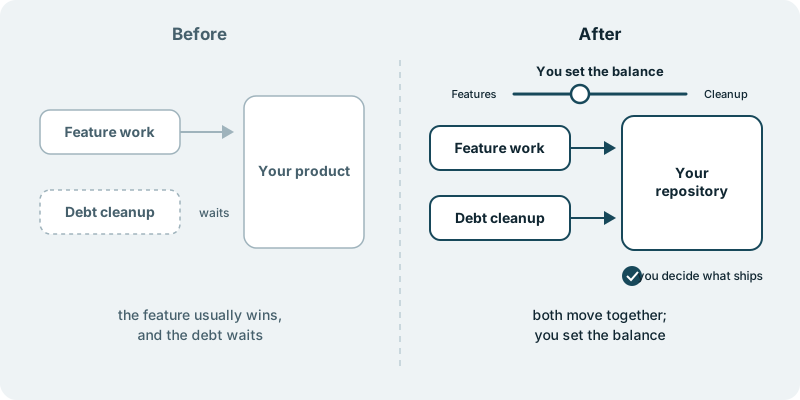
Every quarter there is a conversation about whether to spend time on the debt or on the next feature, and the feature usually wins, because it has a date and a customer attached. The debt grows. Changes get slower and more nervous, and the next conversation is harder than the last.
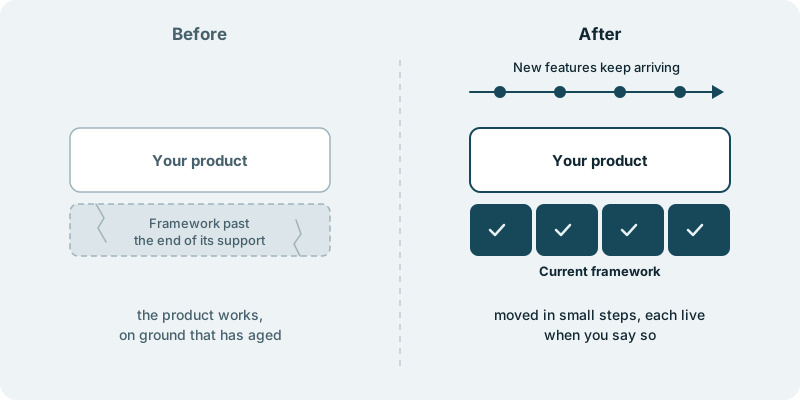
Here the question changes. Cleanup and new work run side by side, so you are no longer deciding which one to starve.
What debt looks like from where you sit
Debt rarely announces itself. It shows up as estimates that keep growing for changes that sound small. It shows up as the module only one person understands, the area where every fix breaks something else, and the release nobody wants to be on call for. It shows up in hiring, when a strong candidate looks at the code and quietly withdraws.
You do not need a definition to recognise it. If your team says “we can’t touch that” about something your product depends on, you have found some.
Why the usual answers fall short
The usual answers each cost something. A freeze on features to clean up stalls the roadmap and tests your stakeholders’ patience. A promise to tidy as you go tends to lose to the next deadline. A separate team for the cleanup pulls your best people away from the product. None of these is wrong in itself, but each one forces a choice, and the choice is the thing worth removing.
What you decide
You decide what counts as debt. For one leader it is the module nobody dares to touch. For another it is the missing tests around the part of the product that earns the most. You name the pain, and the work follows your list.
You decide the balance. If this month is mostly features and a little cleanup, you say so. If next month the weight shifts, you say that too. The setting is yours, and you set the direction again whenever priorities move.
You decide what waits. Debt that sits quietly in a corner does not have to be cleared, and nothing forces you to. A launch date may call for features only for a month.
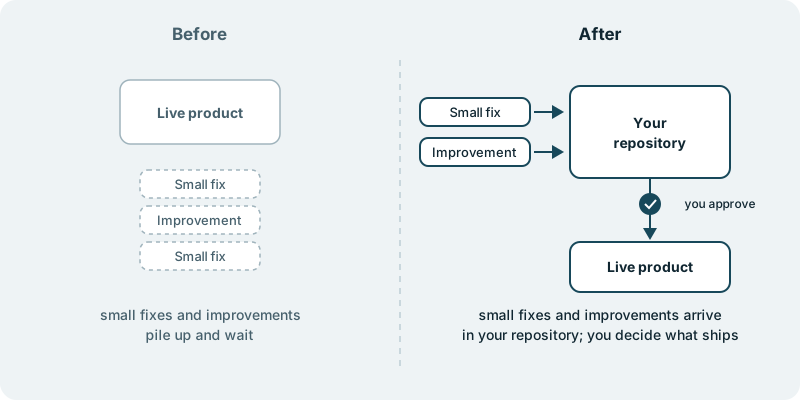
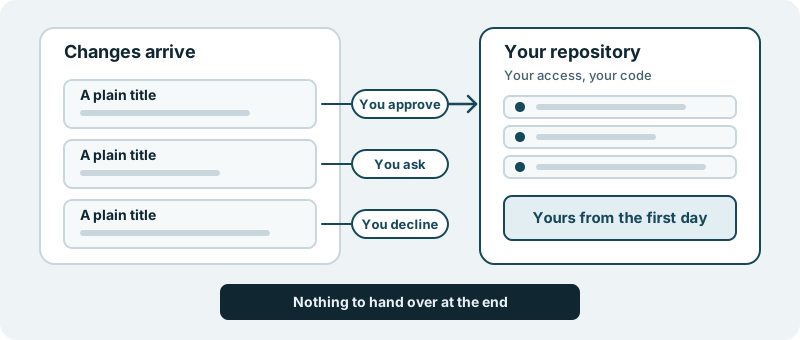
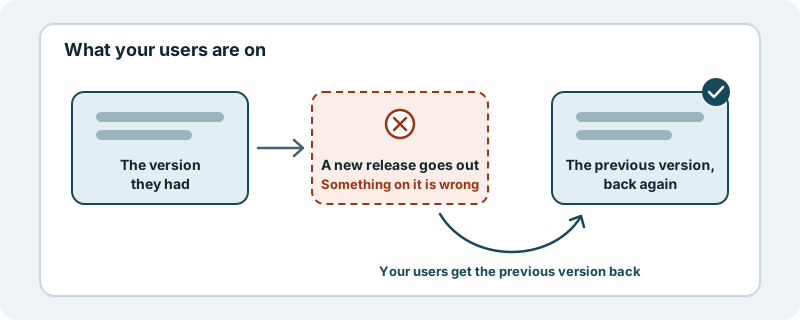
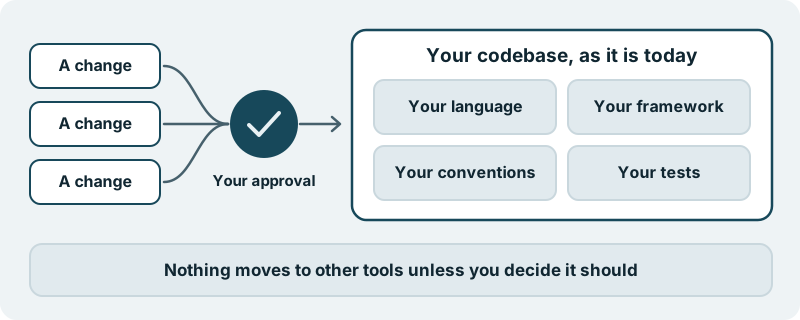
You decide what ships. Nothing reaches your users without your approval, so a cleanup that should be invisible to them is yours to confirm before it goes out.
What you see along the way
You see the cleanup arrive in your own code repository, next to the feature work, in changes your team can read, question and approve.
You see feature work continue. The roadmap is not parked while the codebase is tidied.
You see the balance you chose reflected in what arrives, and you can change it at any point.
What it costs you in time
Your part is to name the areas that hurt, set the balance, and approve what ships. You do not have to run a separate programme or pull your engineers off the roadmap.
What it is not
It is not a promise that all debt disappears. Every living product carries some, and a small amount is healthy. The aim is that debt stops deciding what you can build, and that you are the one choosing where to spend effort.
A good first step
Pick the part of the code your team dreads most, see what arrives, and widen the work if it suits you. It starts with a conversation, with no obligation.