What changes for you
Your product stops slowly ageing in the corner of your attention.
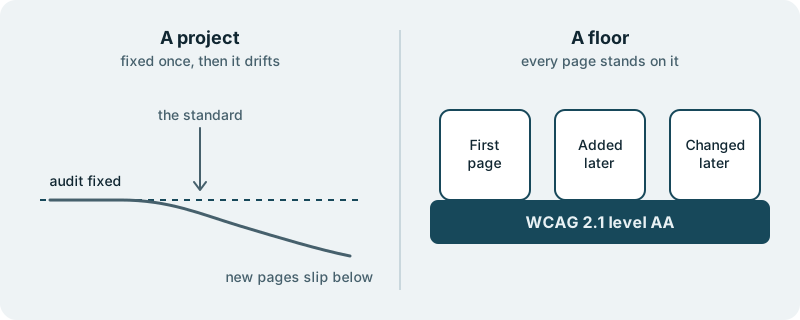
Most live products go through the same quiet decline. The launch is behind you, the team has moved on to new work, and a long list of small things collects. A dependency falls behind. A bug that only a few users hit is never quite worth a sprint. A rough edge in a form stays rough for a year. Nothing is on fire, so nothing gets done, and the product gets a little worse each month.
Maintenance as a service reverses that. Your product keeps getting small improvements and fixes, month after month, without a team for you to assemble or manage. You can lift your eyes to the next big decision while the details are carried for you.
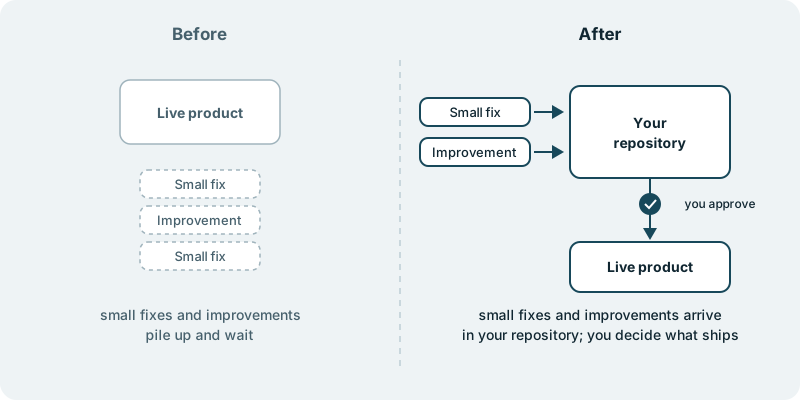
Your product keeps moving forward, week after week. Everything arrives in your own code repository, and the code we build for you is yours.
Who this is for
This is for a product that is already live and that you want to keep in good shape, but that no longer justifies a full team of its own. It might be the internal tool that three departments rely on, the customer portal that launched two years ago, or the product that earns steadily while your best people work on the next one.
It also suits leaders who are tired of the cycle where maintenance is ignored until something breaks, then becomes an emergency. The aim is a product that is looked after before it asks.
What you decide
You decide what counts as maintenance. For one leader it means fixing what users report. For another it means keeping everything current and tidy. For a third it includes small improvements that make the product nicer to use. You say where the edge is.
You decide the order. Bug reports, support requests and your own wish list make up the queue, and you set the direction and change it whenever priorities change.
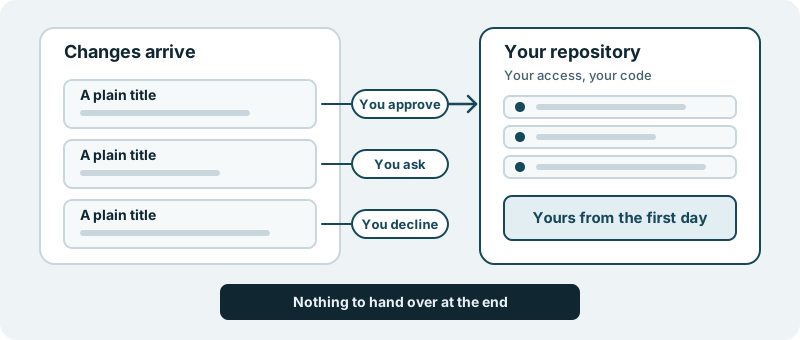
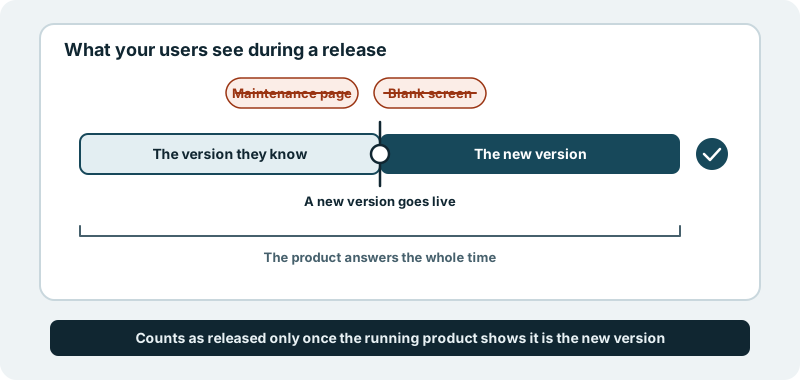
You decide what ships. Nothing reaches your users without your approval.
You decide the size and the rhythm. Some products need a little attention every week. Others need a burst once a quarter. Either is fine, and you can change it as the product changes.
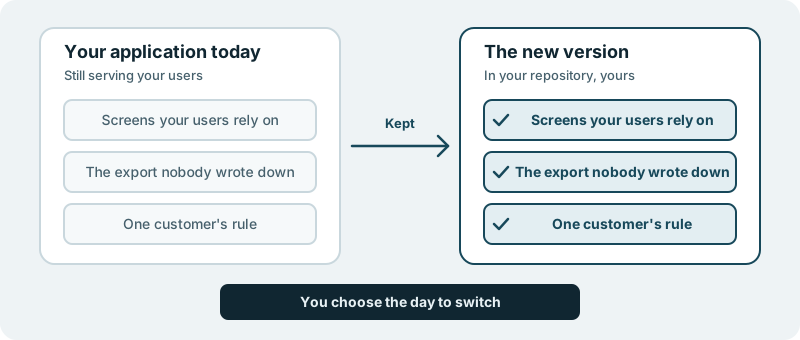
You decide when to stop. Your code and your product stay yours to take anywhere, so nothing needs handing back: the work was already in your repository from the start.
What you see along the way
You see small changes, not a silence followed by a big report. Each one arrives in your repository, where your team, or you, can read and approve it.
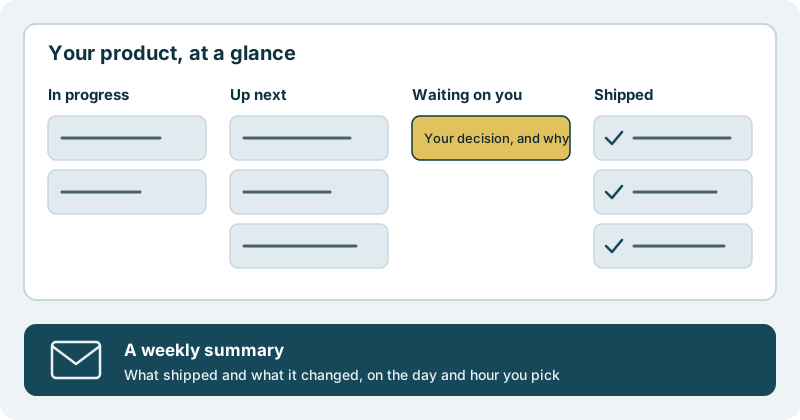
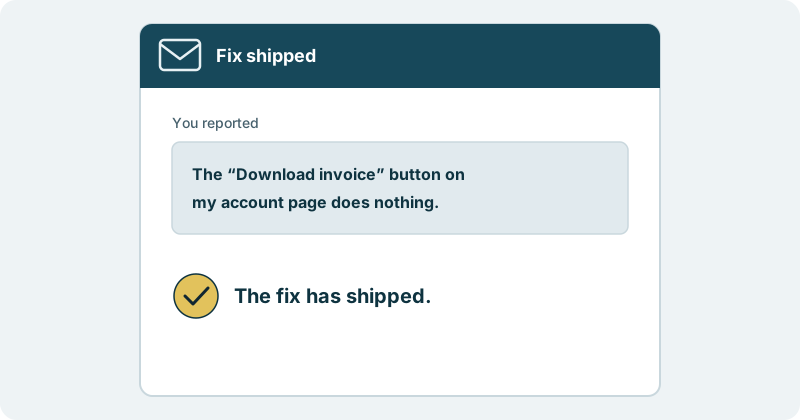
You see what was fixed, what was improved and what is waiting for a decision from you. Choices that are yours, such as removing a feature few people use, are put to you with the options.
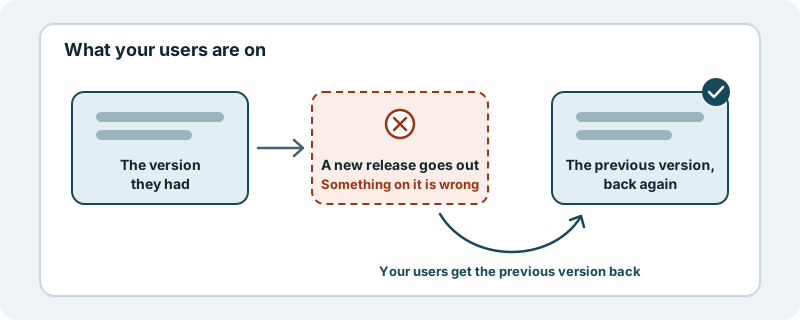
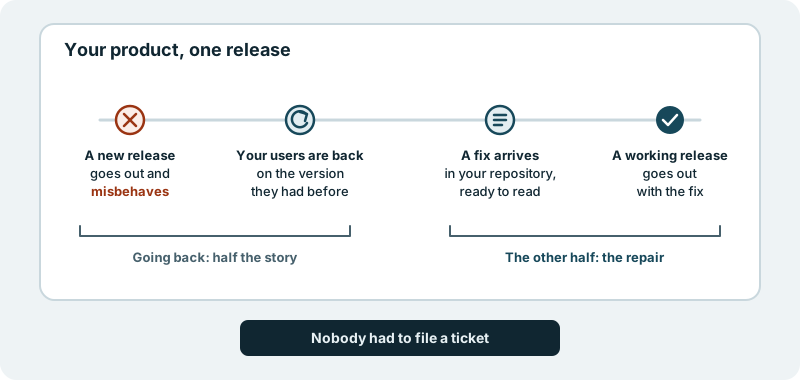
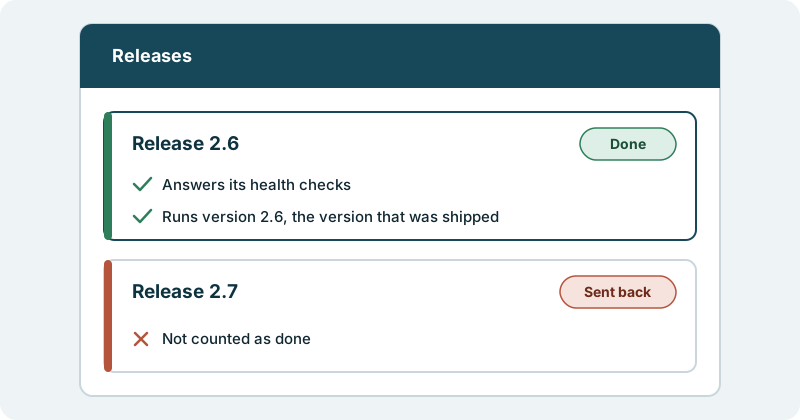
You see calm. If a release misbehaves after it goes out, your users get the previous version back. You then decide what happens next.
You see an honest edge. If something is beyond maintenance, such as a rebuild or a new product line, we say so and propose it as a separate piece of work for you to accept or decline.
What it costs you in time
You read the changes, answer the occasional question and approve what ships. A first conversation is enough to agree what is in and out of scope, and a small first piece shows you whether this suits you.
Proof from our own products
The statements shown with this page are the ones we can stand behind today, and they come from products we run ourselves.
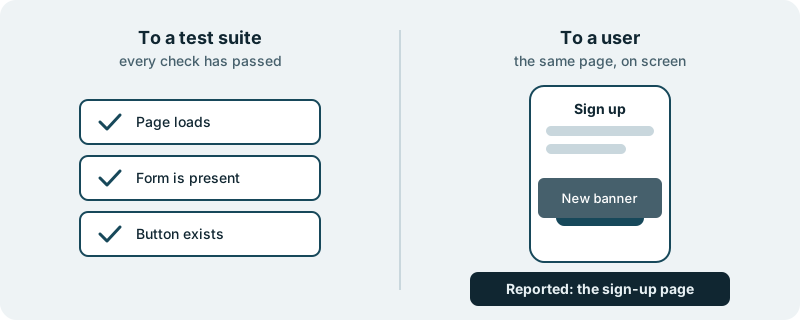
How the work is carried out stays confidential, as your work with us does. What stays visible to you is every change before it ships.
A good first step
If your product is live and quietly ageing, start with the part that nags at you most. You can widen the work, or stop, at any point. It starts with a conversation, with no obligation.