What you get
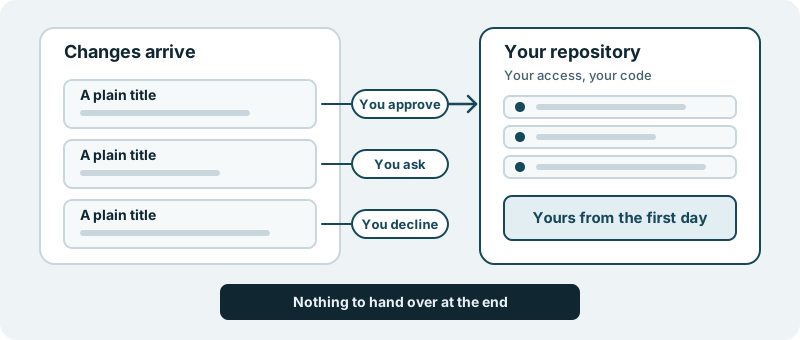
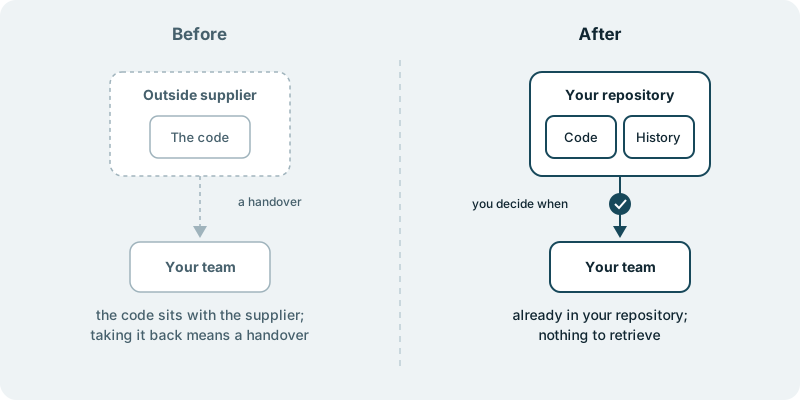
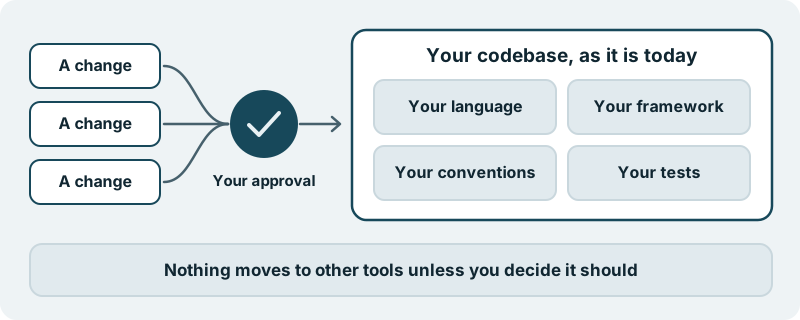
You keep the codebase you have, and the work arrives in it. The work lands in your own code repository.
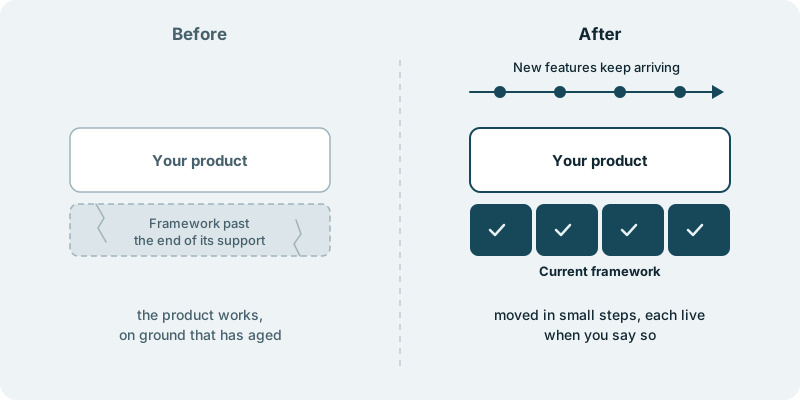
Many leaders have sat through a pitch that begins with a rewrite: move everything to the supplier’s favourite framework first, and the improvements will follow. That route costs months before your users notice anything, and it leaves your team looking after code shaped by someone else’s habits. Zefana does not start there.
Your tools stay your tools. The language, the framework and the way your project is laid out are decisions your team already made, often for reasons that are still good. Every engagement is tailored to your product and your goals, and that begins with the product as it stands today.
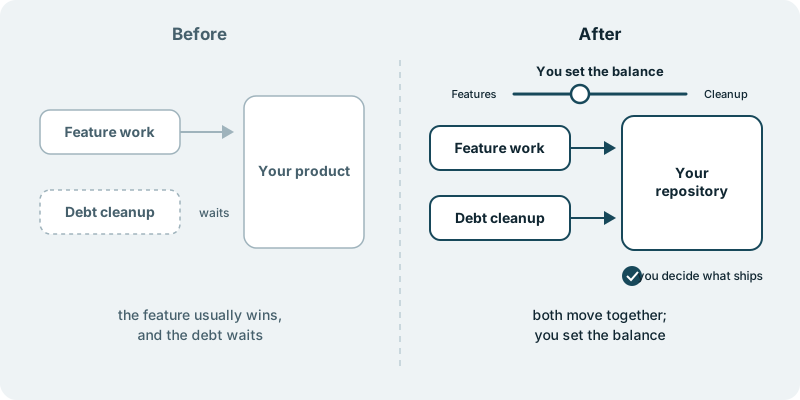
Your conventions are the bar. You decide what ships. Nothing reaches your users without your approval. A change that ignores how your team names things, organises files or writes tests is a change you can send back, so the standard each change answers to is yours, not ours.
A rewrite only by choice. If you want to move to something newer one day, that is a direction you set, with its own place in your priorities. It does not have to come first.
What it looks like in practice
Picture a product that has grown in one framework for years, with habits your developers know by heart. A change arrives. It touches the files they already work in, and they can read it without first learning a new set of tools. If it does not look like the code around it, they say so, and a revised version comes back.
Your team spends its time judging the work, not translating it. Nobody has to pause the roadmap for a migration before the first improvement lands.
For context, here is where work has been delivered so far. Products delivered so far are built with TypeScript, Vue, Astro, and PHP with Laravel. If yours is built on something else, that is a fair first question to bring to a conversation.
Stopping changes nothing about your tools either. Your code and your product stay yours to take anywhere, and because they are still written the way your team writes, whoever carries on next opens a codebase that already feels familiar.
If you would like to test this on your own product, choose one small change and see whether what arrives reads like something your team wrote.