What you get
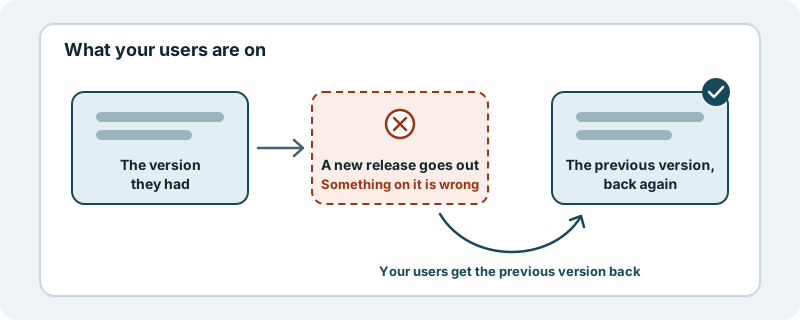
When a release misbehaves after it goes out, your users get the previous version back.
That sentence is the whole promise, and it is worth stating carefully, because it is easy to over-read. It is about what your users experience. They were using something that worked. A new release went out and did not behave. They are returned to what worked, and they are returned to it without anyone having to file a ticket first.
In practice that gives you two things.
A shorter bad moment. A faulty release is no longer something that stays in front of your customers while people work out who should act. The version they had before comes back, and the rest of the problem becomes a matter for the working day instead of an emergency.
Room to keep shipping. Leaders slow their teams down when a release feels like a gamble. Knowing that a misbehaving release is followed by a return to the previous version makes it easier to say yes to the next change, and the one after it.
What it does not do
Two limits are worth knowing before you rely on this.
Changes to stored data are not reversed along with the release. Your users get the previous version of the product, but information that has already been changed stays changed.
It is also not a control for choosing a past version at will. It does not hand you a button that returns to a version of your choosing. It is a safety net for the moment a release misbehaves.
What it looks like in practice
Imagine a release goes out late on a Thursday. Within minutes something is wrong: a page that worked yesterday no longer does. In a team that relies on people noticing, this is the start of a long evening. Someone sees a message, someone else tries to reproduce it, and meanwhile customers keep running into the fault.
Here, your users are back on the previous version, and the product they know is the product in front of them. On Friday morning the change that caused it is still in your repository for your developers to read, so they can see what was attempted. The next step is a correction, released when it is ready.
For a technical leader, it means your team can release with more confidence, because the cost of being wrong is smaller and more predictable.
Where this fits
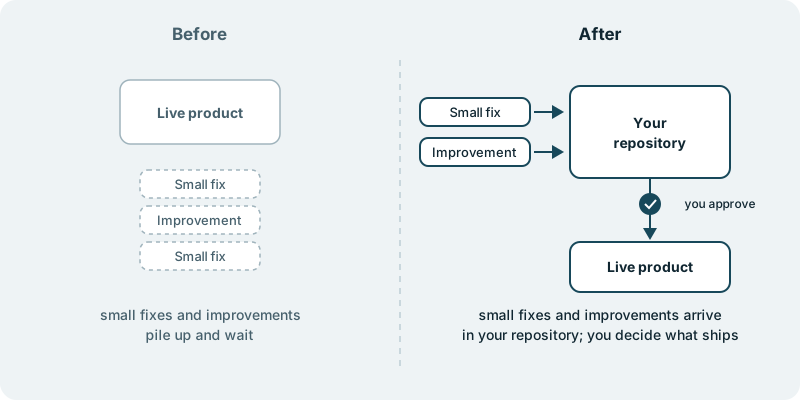
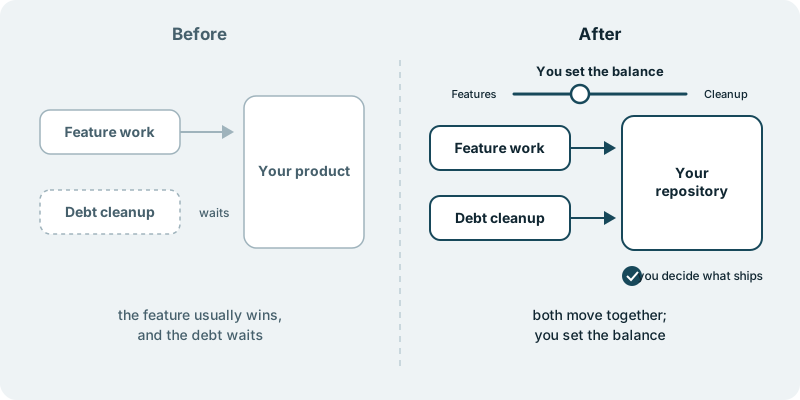
This ability pairs naturally with keeping a live product in good order, where steady, frequent releases are the goal and a safety net is what makes that comfortable. It also helps when you are paying down old debt while new features keep shipping, because both kinds of change can go out knowing that a mistake will not linger.
If you would like to see how this would work for your product, we can start with one small piece of work and you can judge it by what arrives.