What changes for you
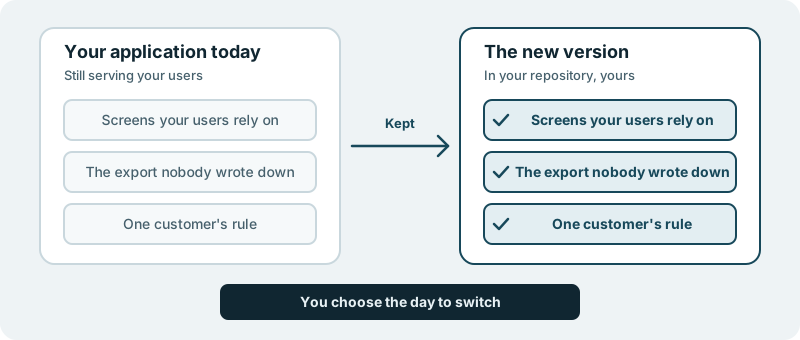
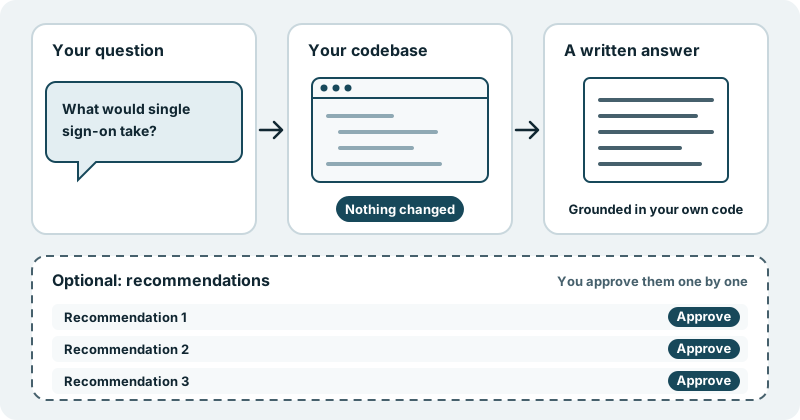
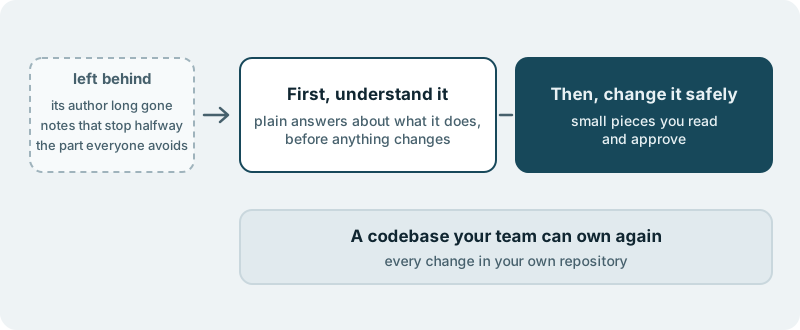
You learn what you actually inherited. Before anything changes, you get plain answers to the questions nobody has dared to ask: what the system really does, which parts the business leans on, where it is fragile and what would stop if it went down. Behaviour that looks odd is named as it surfaces, so you can tell a rule someone once needed from a flaw nobody noticed.
That knowledge is what a takeover brings and nothing else does. An order system written by a contractor years ago. An integration the founder’s first hire built over a summer. A customer portal that works, mostly, and that everyone routes around. Its author has left, the notes stop halfway, and each request that touches it is answered with “better not”. The business keeps depending on it, and the list of things you cannot do grows.
Once you know what is in it, the system stops being a no-go area and becomes ordinary code again, something your team can read, change and talk about without lowering their voices. When you are ready for the first change, it is a small one.
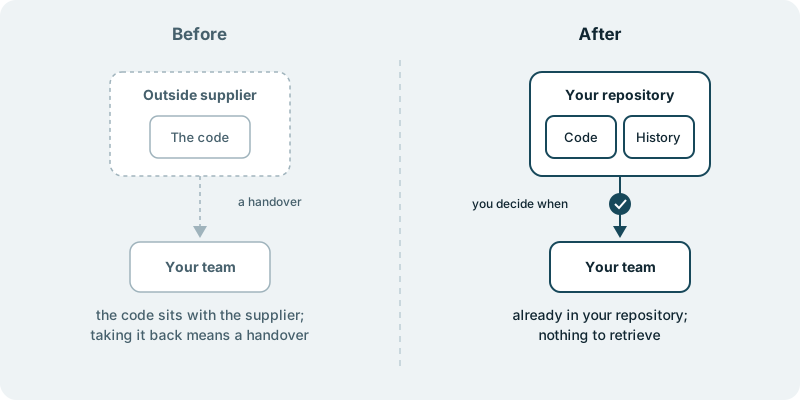
The work lands in your own code repository. The code we build for you is yours.
What you decide
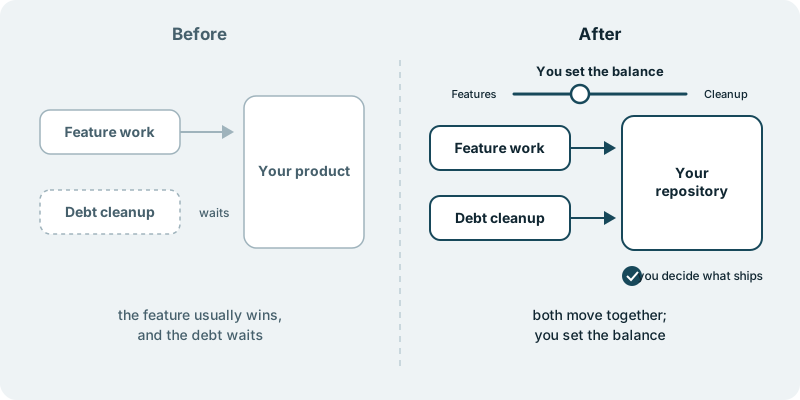
With the system described, the open question is what it is for from now on. Keeping it running as it is, improving it step by step and planning its replacement are three different answers, and you give yours once you know what you have, not before.
Some parts can stay off limits for a while. If one area carries your invoicing, it is left untouched until what you have learned about it makes you confident.
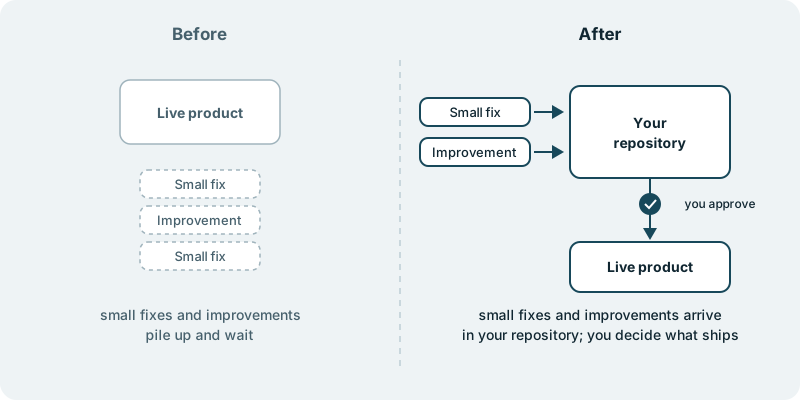
The first change is your pick, and the order after it is too. No change goes live until you have approved it.
What you see along the way
You see the inherited system described in words your product people can follow, not only your engineers.
Then you see each change before it goes live, with a short note on what it touches and why.
What your people bring
The answers only they have: who uses which part, and what must never stop. Their own work carries on alongside.
If you stop early
Stopping does not put you back where you started. The answers about the system stay with you, every approved change is already in your repository, and the code and the product remain yours to take wherever you choose.
A good first piece is the one question about the system you most need answered. Ask it, read the answer, and decide what comes next. It starts with a conversation, with no obligation.