What changes for you
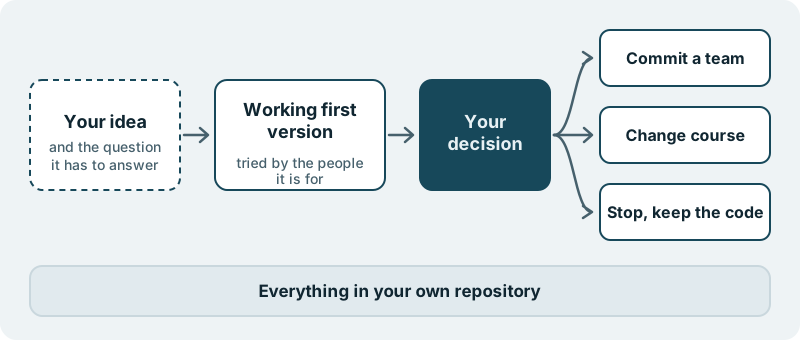
You decide on a working version instead of a slide. Before anyone on your team changes desks, the idea exists as something you can open, click through and show to the people it is for.
Most product ideas are argued for on paper: a vision, a mock-up, an estimate. Funding one usually means moving people off work that already earns its keep, and the honest answer to “will anyone use this?” arrives only after that move. A first working version changes the order. You watch the idea meet its users first, and the question of a team comes second.
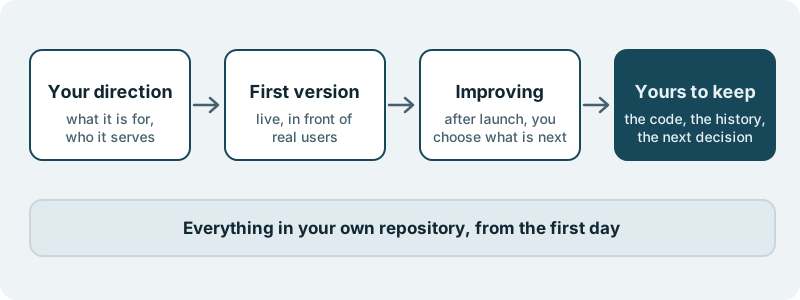
Zefana can carry that first version for you. You describe the idea and who it serves. The work lands in your own code repository. Your team stays on the product it already runs.
What you decide
You decide what the idea has to prove. One clear question is worth more than ten features nobody has tried: will people sign up, will they come back, will they reach the part you believe matters?
You decide how small the first version is. The narrowest thing that can answer your question is usually the right place to begin, and you can widen it as you learn.
You decide who sees it. You decide what ships. Nothing reaches your users without your approval.
Then you make the call that matters: commit a team, change direction or stop. That call stays yours. A version people have actually used gives it firmer footing than a forecast, without pretending to remove the judgement.
What you see along the way
You see the idea take shape in a repository you own, and you can follow what changed and why. You see what comes next and can reorder it when something you learn moves the priorities.
Once the first version is in front of people, you see how they use it. That is the part a document can’t show you, and it is the part your decision rests on.
What we tried on ourselves
ClickDeeper has also been built a second time, from a bare starter project, as an experiment. It is not a client delivery.
Our own builds include the full story of this one.
What it costs you in time
Mostly the time it takes to be clear about the idea and the question it has to answer. After that, your part is a set of short product decisions. You don’t recruit anyone, and you don’t reshuffle a team to find out whether the idea deserves one.
If the answer is no
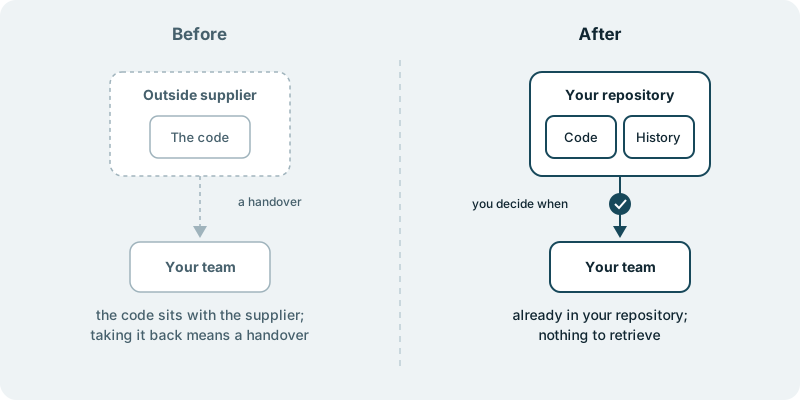
Stopping is a result, not a failure. You learned something without moving a single engineer. The code we build for you is yours. Your code and your product stay yours to take anywhere, so a later attempt in a better season doesn’t start from nothing.
If the answer is yes
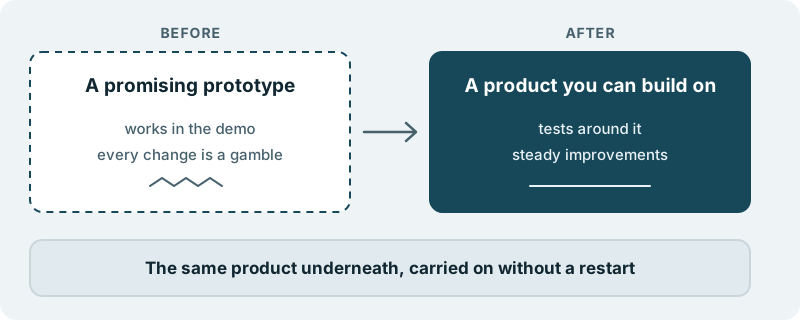
The people you move onto the idea start from a working version and its history, not from a brief. They can take it from there, or Zefana can keep carrying it while your team finds its feet.
Starting small
It starts with a conversation, with no obligation. Bring the idea and the question it should answer, and we will talk about the smallest version that can answer it.