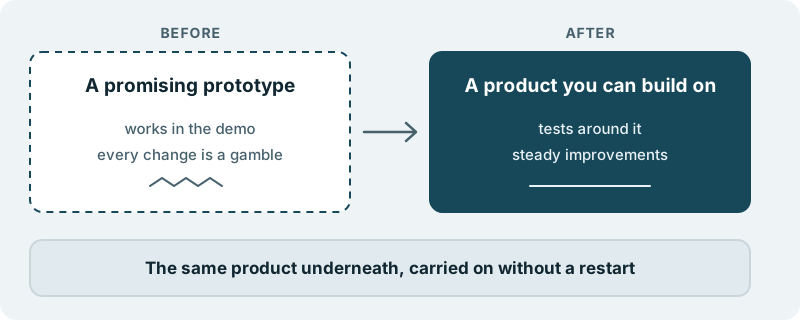
Your first version works. It wins the demo, and people ask for more. Yet every change to it now feels like a gamble. You want it carried forward, not started again.
What changes for you
The prototype stops being something you protect and becomes something you can build on.
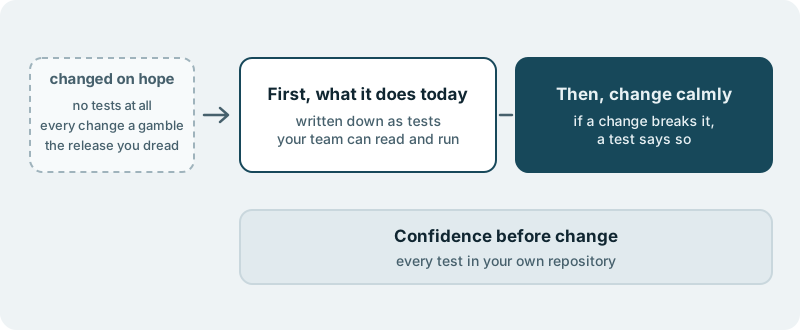
A first version that works in the demo has already done the hard part: it showed the idea is worth having. The choices behind it were right for proving that. What it often lacks is the ground underneath. There are few tests, so nobody can say whether a change will break something that worked yesterday. The people who know the code are wary of touching it, and new requests queue up behind that caution.
The usual advice is to throw it away and rebuild it properly. That costs you the time it took to get here, and the product your first users know goes quiet while a new one catches up.
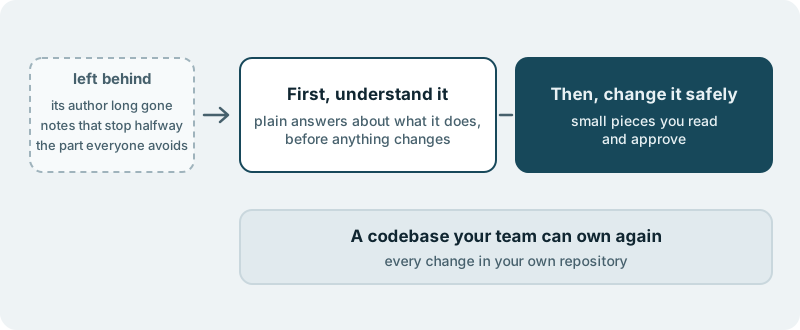
Here the same product stays underneath and is carried forward. Zefana can carry the work for you: you set the direction, and finished changes arrive in your own repository for your approval. Tests are added around what already works, improvements arrive, and the good decisions in the first version stay where they are.
For founders: your product moves forward without you having to build a team first.
What you decide
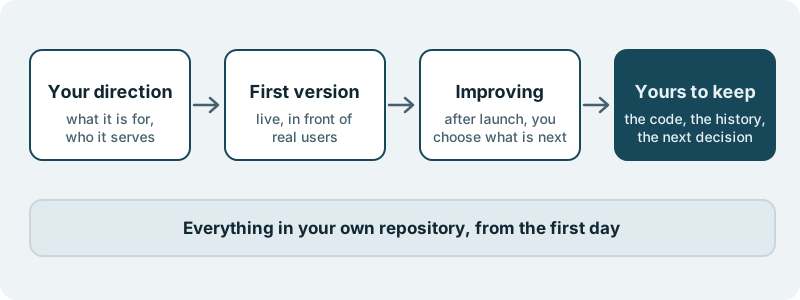
You decide what the product should become. A prototype often proves more than one idea, and you choose which one it now serves.
You decide what comes first: the change a customer is waiting for, the part of the product you are most nervous about, or the feature that would make the next conversation easier. You can change that order when you learn something.
You decide whether anything is replaced. If a part of the prototype should go, the call is yours.
You decide what ships. Nothing reaches your users without your approval.
What you see along the way
You see your own product change, not a new one being built beside it.
Each change arrives in your repository with a plain account of what it does and why, so the history reads as a record of decisions. You see what is being worked on next, and you can reorder it. Tests are added in places where there were none.
The code we build for you is yours. The tests and the history sit next to the first version, in the same place.
An example from our own work
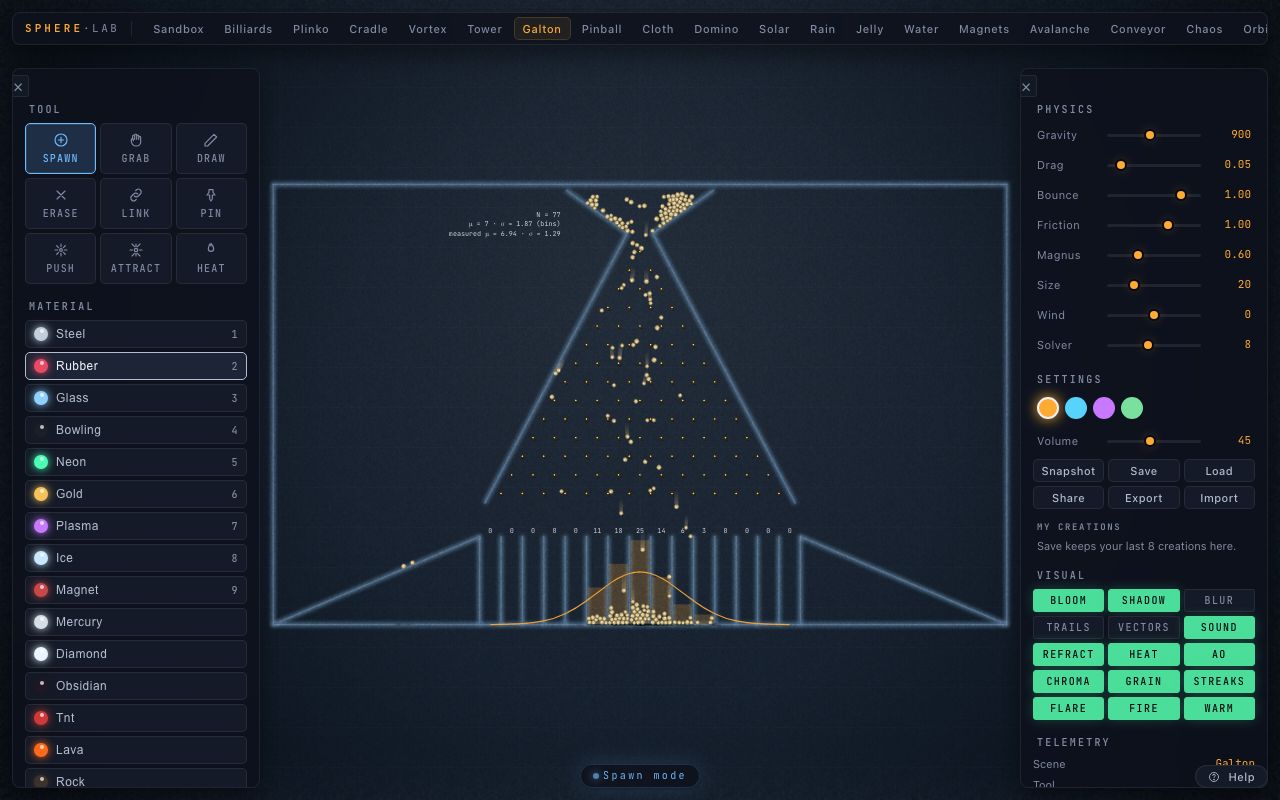
Sphere Lab is our own showcase build. Sphere Lab’s first version was made by one person. From 16 October 2026 Zefana carried it on: in the first 29 hours it made 146 code commits, finished 17 improvements and grew the test files from 4 to 23.
Those figures describe Sphere Lab and nothing else. They are not a promise about your prototype, whose path depends on what it is and what you put first. What they do show is the shape of the change: the same product, carried on, with more test files beneath it than it started with. The first version was good enough to build on, and that is the compliment it deserves. You can read the whole Sphere Lab story.
What it costs you in time
Mostly the time it takes to say what the product is for and what matters first, then short decisions as they come up. You do not need to hire before you know what the product needs.
If you already have engineers, they stay involved. Your own team can work with Zefana too: set the priorities, follow the progress and approve what ships.
If you want to stop
Your code and your product stay yours to take anywhere. Whatever was added stays in your repository with the rest, ready for whoever works on it next.
Starting small
It starts with a conversation, with no obligation. Bring the prototype and the change you are most wary of making, and we will talk about where to begin.