What changes for you
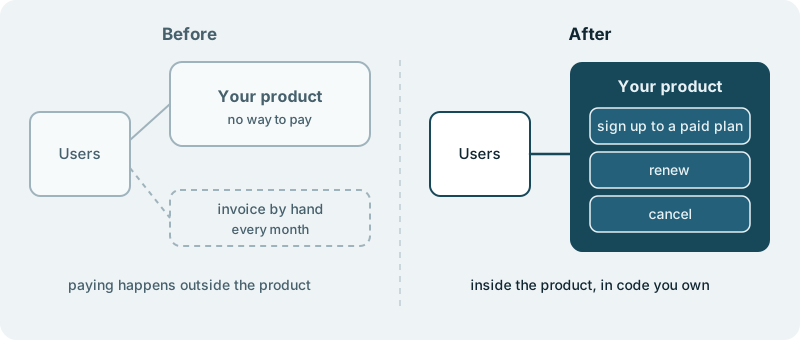
Customers can start paying for your product inside the product, and the monthly round of manual invoices stops being how you get paid.
Many products reach this point the same way. People sign up, use the product and tell you it helps. Then the question of money arrives, and there is nowhere in the product to answer it. So someone on the team sends an invoice by hand each month, chases the late ones, and keeps a list of who has paid in a spreadsheet nobody quite trusts. Or the product stays free because adding payment always seems like a job for next quarter.
With subscriptions in the product, a customer who wants to pay can choose a paid plan and sign up to it without writing to you first. When the period ends, the plan renews. When a customer wants to stop, they can cancel from inside the product rather than sending an email that waits in someone’s inbox. Those three moments, signing up, renewing and cancelling, are the scope here. For your team, the change is quieter than it sounds. The person who sent the invoices gets that time back, and the question “has this customer paid?” has its answer in the product instead of in a spreadsheet and someone’s memory. You lift your eyes from the monthly chase to the questions that decide the business: who your product is for and what it is worth to them. The work lands in your own code repository. The code we build for you is yours.
What you decide
You decide whether now is the right moment to charge. Asking for money changes how people judge your product, and it is worth doing when you know who would pay and for what.
You decide the plans. Which plans exist, what each one includes, and who may choose which one are commercial choices, and they belong to you.
You decide the terms. What happens at renewal, what a customer keeps after cancelling and what your terms of sale say are agreements between you and your customers, often settled with your own accountant or legal adviser.
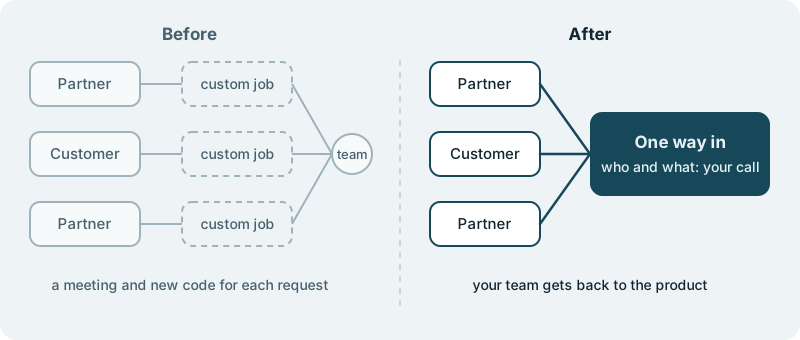
You decide who signs up on their own. Some customers may be better served by a conversation and a contract of their own, such as a large organisation with its own buying process. Where that line runs is yours to draw.
You decide how existing customers move across. A customer on a manual invoice today may need a personal note before anything changes for them.
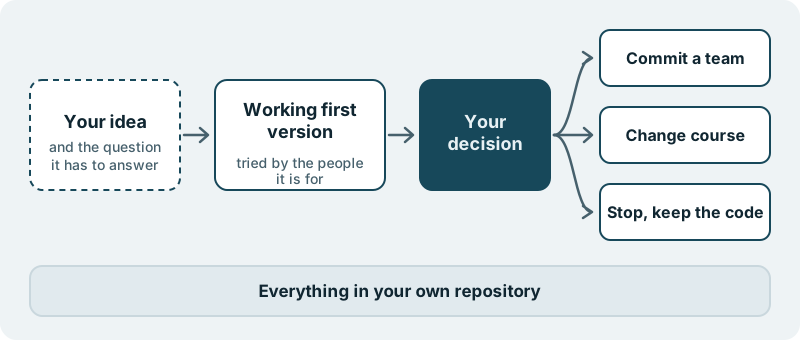
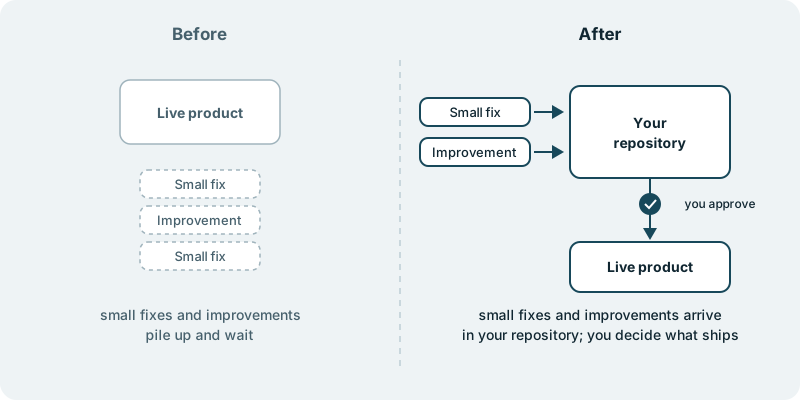
You decide what ships. Nothing reaches your users without your approval.
What you see along the way
Questions that are yours come to you plainly, with the context needed to answer them: what a cancelling customer should see, what a plan should be called, how it should be described to someone choosing between plans. They are put to you rather than guessed at.
The changes arrive in your repository for you to look at, and you can follow how the sign-up, renewal and cancellation parts take shape inside the product your customers already use. If a piece does not read the way you want your customers to meet it, you say so, and it does not ship until it does.
What it costs you in time
A first conversation about who would pay, for what, and what your customers do today when they want to pay you. After that, short decisions as they come up. Your attention matters most on plans, terms and the message to existing customers. Someone who already talks to your customers about money is the best reader of the early pieces.
What if you want to stop
Your code and your product stay yours to take anywhere.
Starting small
We have no earlier subscription delivery to point to, and we will not suggest otherwise. A sensible first piece is a single paid plan that new customers can sign up to, so you can see how people take to it before you add more plans or move existing customers across. Every engagement is tailored to your product and your goals. It starts with a conversation, with no obligation.