What changes for you
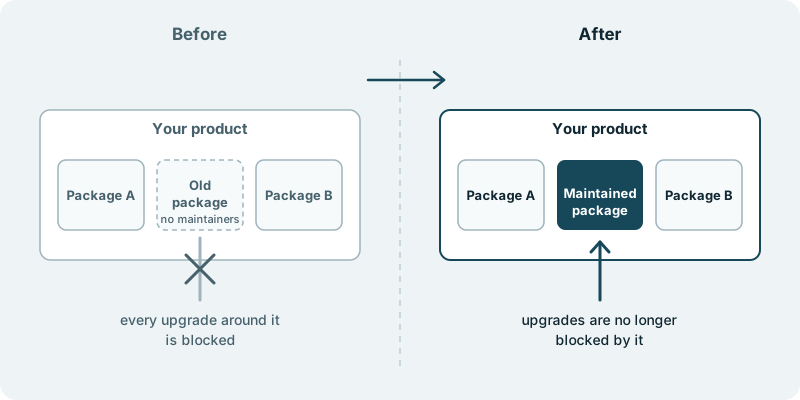
The package nobody looks after any more leaves your product, and the product goes on doing what it did before.
It probably arrived years ago, when it was the obvious choice for one job: reading a file format, drawing a chart, turning dates into words your users understand. Then the releases stopped. The people who wrote it moved on to other work, the questions left for them go unanswered, and the last version came out before most of your current team joined.
On its own, an old package is not a crisis. The trouble starts when it holds everything else back. Your team wants a newer version of the language or framework the product runs on, and the old package will not work with it. Another package needs an update, and the old one stands in the way. Each upgrade your engineers plan ends at the same name, and the list of work waiting behind it keeps growing.
That package is replaced, either by one that is still looked after or by a small piece of code written for your product alone. The screens, exports and behaviour your users rely on stay as they were. What changes sits underneath: the upgrades it was blocking are no longer held up by it.
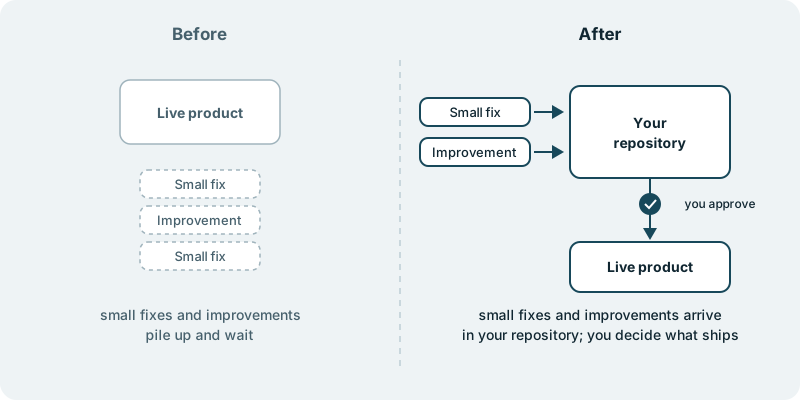
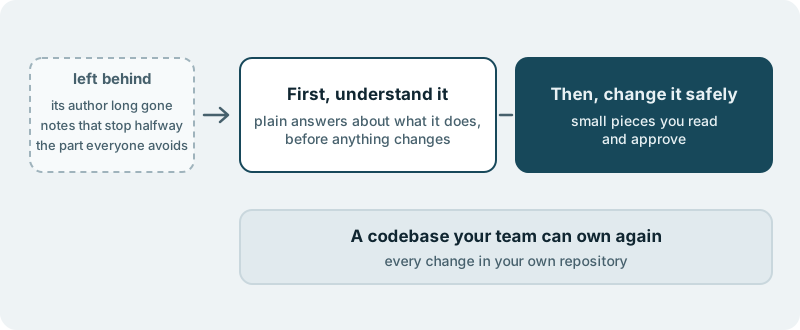
The new code arrives in your own repository, where your engineers can read every line of it, and it belongs to you.
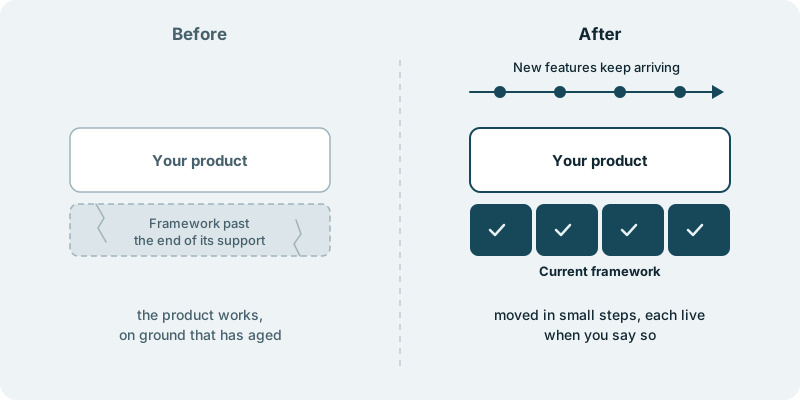
If the problem is the framework your whole product is built on rather than one package inside it, moving off an ageing framework is the page for you.
What you decide
You decide which package this is about, and your engineers usually know it at once.
It is the name that comes up whenever an upgrade stalls. You may have more than one candidate, and choosing the one that blocks the most is a decision that belongs to you.
You decide what kind of replacement you would rather live with. A package that others still maintain is kept current by people outside your team, but it remains something you depend on. A small piece of your own code needs no outside maintainer, but your team looks after it from then on. A choice like this reaches you with the question and a link.
You decide whether the old package’s quirks stay. Users sometimes grow used to a small oddity, such as the way a date is written or the order a list appears in. Keeping it exactly as it was, or tidying it up while the package goes, is your call.
You decide what follows once the way is clear. The upgrades that were waiting are separate pieces of work, and which of them goes first is up to you.
You decide what ships. Nothing reaches your users without your approval.
What you see along the way
You see the replacement arrive in your repository as small changes your engineers can read and approve, and the abandoned package leave with them.
When the work is done, the package that held up your upgrades is no longer part of your product, and your team can see that for themselves in the code.
What it costs you in time
A first conversation about the package, what it does for your product and which upgrades it is holding back. After that, some time from an engineer who knows where the product leans on it, for the questions only someone inside your team can answer. It also helps to hear from whoever answers your customers, since they are the first to hear when a familiar screen behaves differently.
What if you want to stop
Whatever you approved before stopping remains in your repository. If you stop partway, your engineers can see which parts of the product already use the replacement and which still rely on the old package, because every change was one they read and approved. Nothing ties you to us, and the code goes wherever your product goes.
Starting small
We have not replaced an abandoned package in a customer’s product yet, and we will not suggest otherwise. A sensible first piece is the one package your team names first: the one standing in front of the upgrade you want most. Every engagement is tailored to your product and your goals. It starts with a conversation, with no obligation.