What changes for you
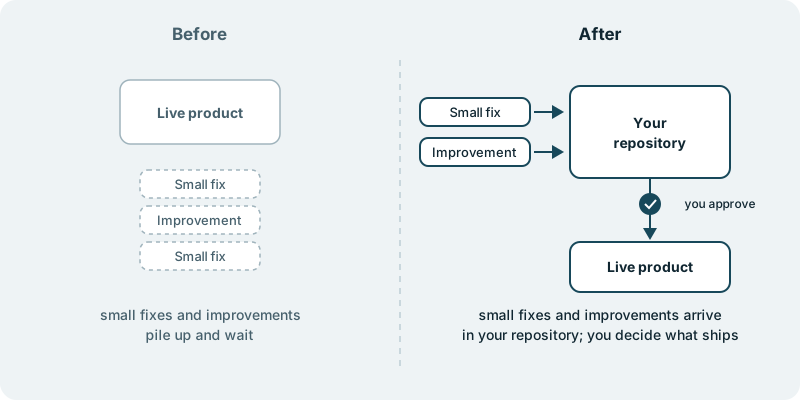
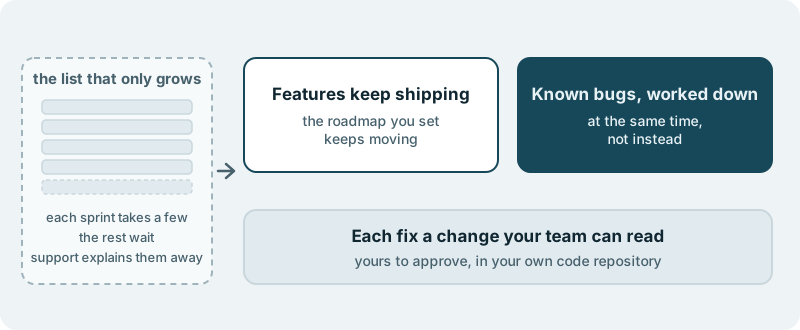
The bug list stops being a place where reports go to wait. Known bugs are worked down while the features you planned keep shipping, and each fix reaches your repository as a change your team can read.
Most products carry a list like this. It began small: a handful of rough edges, noted down to fix later. Then every sprint brought new work, and each sprint took a few bugs off the list while more arrived. The rest settled in. Support learned the workarounds by heart. Sales learned which screens not to open in a demo. Somewhere along the way the list stopped being a plan and became a record of things everyone has agreed to live with.
That has a cost, even when no single bug is serious. Each one is a small tax on your users’ patience and on your support team’s day. A customer who meets the same fault twice starts to wonder what else is wrong. And the list itself becomes something nobody wants to open, because opening it only shows how far behind you are.
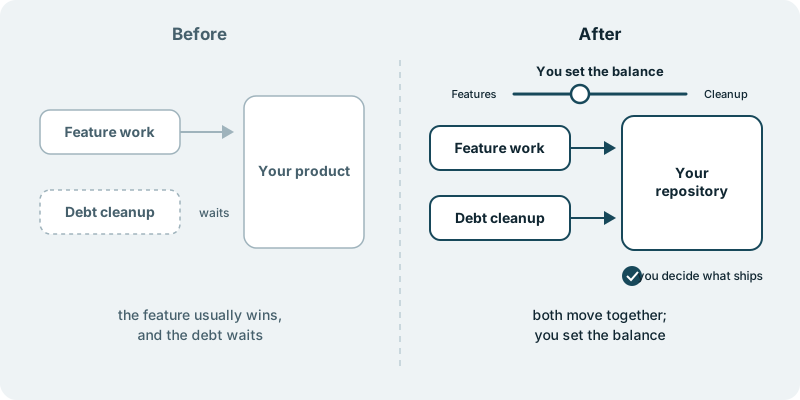
Carried for you, the list gets real attention next to new work, not instead of it. You stop trading one against the other each sprint, and the roadmap you set keeps moving. Your product keeps moving forward, week after week.
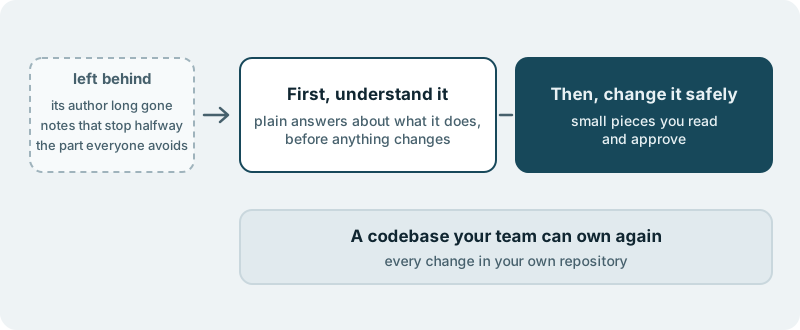
The work lands in your own code repository. The code we build for you is yours. Each fix arrives with a plain note on what it does and why, so the engineer who wrote the original code, or someone who joined last month, can follow it and say yes or no. Your code, in your repository has more on where changes arrive.
Access stays yours to set. We work within the access you grant, and nothing more.
What you decide
You set the direction. We carry the work through to shipped software.
That holds for this list as much as for the roadmap. If one bug costs you an awkward customer call every week, or one screen is the one your support team dreads, say so. You know your product’s sore spots better than anyone, and what matters to your business is yours to name.
Some known bugs are not worth a change at all: a quirk in a feature you plan to retire, or a corner almost nobody visits. Deciding to leave one alone, and telling your team plainly, is a choice too, and it is yours.
You decide what ships. Nothing reaches your users without your approval.
What you see along the way
You see fixes, one change at a time, in your repository. Each one is small enough for your team to read and approve, and the note that comes with it is written for a product lead as much as for an engineer.
What you will not see is a promise that the list reaches zero, or that your product will be free of bugs. No honest team can promise either. Software that people use and change keeps turning up new problems. What changes is that the known ones are being worked down, instead of quietly becoming part of how your product behaves.
Bugs your users report to you themselves are a related story. Your users’ requests, closed out with them covers those. If the bug list is one symptom of a codebase that resists every change, paying down technical debt while features keep shipping is the wider version of this page.
What it costs you in time
Mostly the time it takes to read fixes and approve the ones you want. Your engineers stay on the features you planned, and every fix that ships is one fewer workaround your support team has to explain.
What if you want to stop
Every fix you approved is already in your repository, so there is nothing to hand over. Your code and your product stay yours to take anywhere.
Start with the bug your support team explains most often. Bring it to the first conversation, along with the list it sits on. It starts with a conversation, with no obligation.