What changes for you
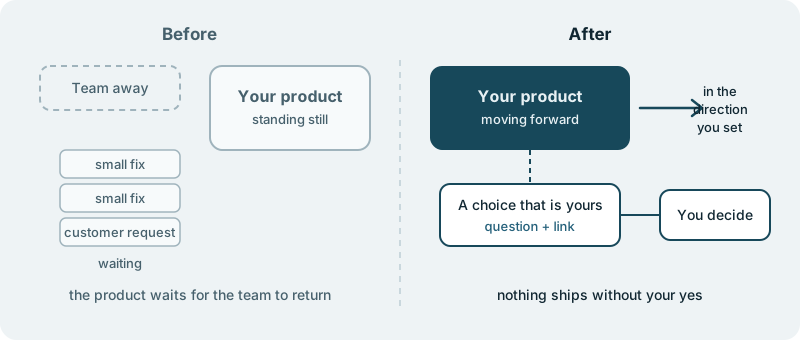
Your live product keeps moving in the direction you set, even in the weeks when your own team cannot give it their attention.
Every team has these stretches. Summer empties the office. Someone key goes on parental leave. Or the whole team is heads-down on the next launch, and the product your customers already use gets nobody’s time. Small fixes start to queue. A broken link on a page waits. A request a customer raised in the spring is still a note in somebody’s inbox. When people come back, their first weeks go to catching up instead of moving on.
With Zefana carrying the product, that stretch looks different. Your product keeps moving forward, week after week. The small things get worked on along the lines you agreed before people left, and the product your team returns to has moved on rather than stood still. You set the direction. We carry the work through to shipped software.
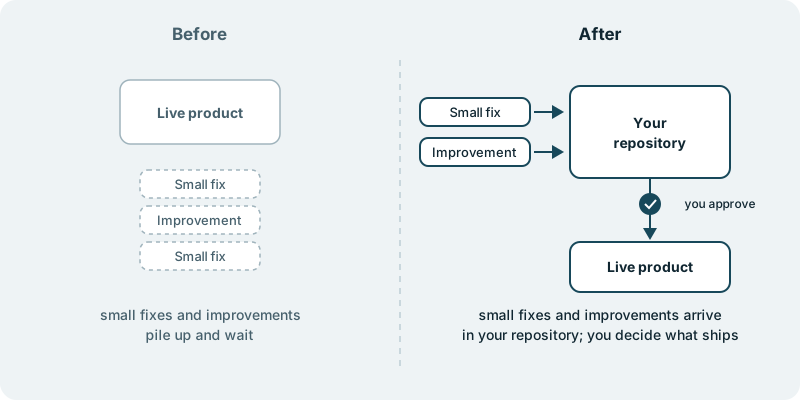
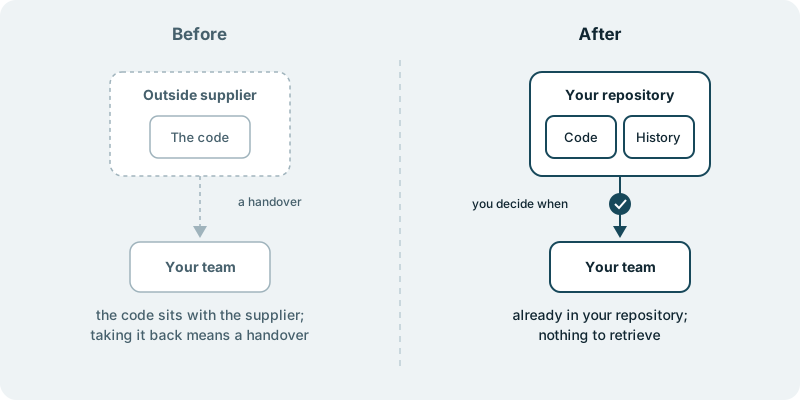
For you, the change is that a holiday or a launch no longer means choosing between the product and the people. The work lands in your own code repository. The code we build for you is yours.
What you decide
You decide the direction before the quiet stretch begins. A short list of what matters most this season is enough to start: the rough edges customers mention, the small improvements that keep slipping, and the parts you would like to see tidied.
You decide what is off limits. If a part of the product is about to be redesigned, or belongs to the launch your team is working on, you say so and it stays untouched until your team is ready for it.
You decide how closely you follow along. Some leaders read each change as it lands. Others read the weekly summary and answer only the questions that are theirs. Either way, the direction stays yours to adjust whenever you want to.
You decide what ships. Nothing reaches your users without your approval.
What you see along the way
A choice that is yours reaches you with the question and a link, so you can answer it without opening a project tool or calling a meeting. Anything paused shows why and when it clears. The page on decisions that come to you says more.
Once a week, a summary tells you what shipped and what it changed for your product. It takes the place of the status meeting nobody is around to hold; the weekly summary page describes it.
The changes themselves are in your repository, where your team will find them when they return.
What it costs you in time
A conversation before your team steps away, to agree the direction and what stays off limits. During the stretch, answering the questions that are yours and approving what ships. When your team is back, reading what changed, with the weekly summaries as a guide.
What if you want to stop
Your code and your product stay yours to take anywhere. When your team returns, you decide whether to carry on or hand the work back to them.
Starting small
A sensible first step is one stretch you can already see coming, such as the next summer or a planned leave, with a short list of what matters. Every engagement is tailored to your product and your goals. It starts with a conversation, with no obligation.