What changes for you
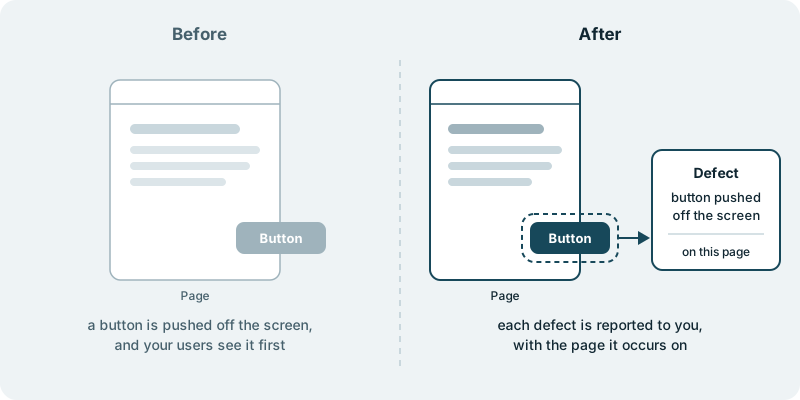
Today the first sign is often a support message, a bad review or a screenshot from a customer who could not press a button.
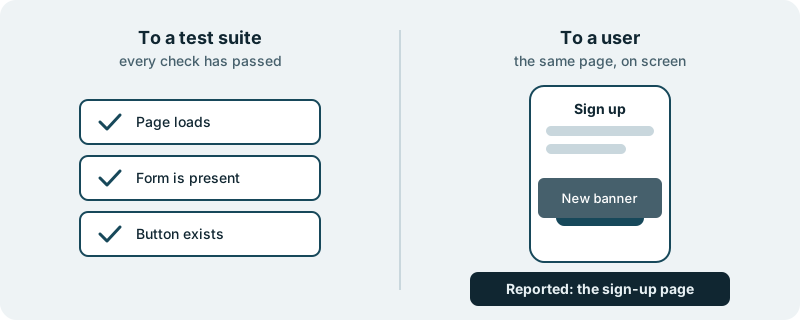
Afterwards, breakage that is visible on a live page is reported to you as a defect, with the page it occurs on. You hear about it with enough detail to act on, instead of having to ask which screen, which phone and which steps.
This matters because the worst defects are often the quiet ones. Nothing crashes. The page loads and the numbers add up, yet the layout is wrong on the screen your customer is holding. A button sits under another element. A heading runs off the edge of a narrow phone. A form that worked yesterday now hides its own submit control. Those problems slip past the checks that tell you the code works, and they cost trust anyway.
Who this is for
This is for teams whose product is live and changing. Every release is a chance for something to move out of place, and the people best placed to notice, your customers, are the people you least want to find out. It suits you if your support queue sometimes opens with “I can’t find the button”, if your team tests the happy path and still gets surprised, or if nobody has time to click through every page after every change.
It is not a design review and it does not judge taste. It is about breakage: things that were fine and no longer are, or never were.
What you decide
You decide which pages matter most. Your sign-up, your checkout and the screens your best customers use every day can come first.
You decide what is a defect to you. A small difference your brand team cares about and a broken button your support team dreads are different things, and you set the priority between them.
You decide what gets fixed and when. The reports are yours to reorder, and you decide what ships. Nothing reaches your users without your approval.
You decide how far this goes. You can begin with a handful of pages and widen it as you see what turns up, or stop when you have seen enough.
What you see along the way
You see each defect as a plain report: what looks wrong, and the page it occurs on.
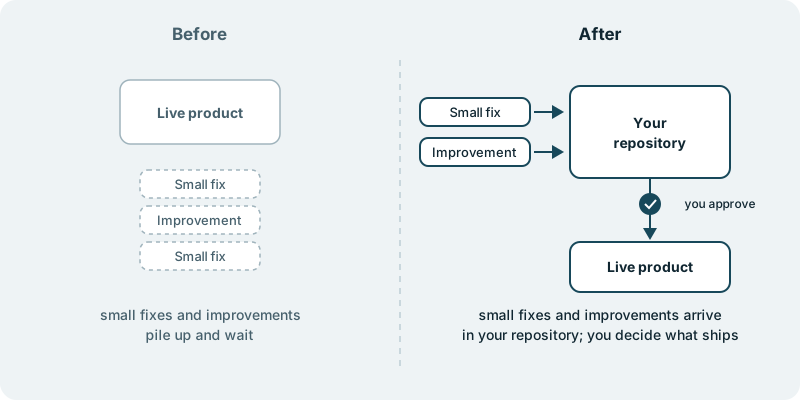
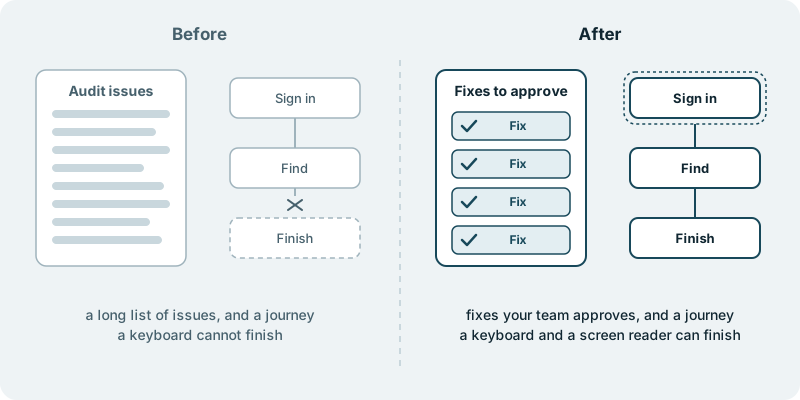
You see fixes arrive in your own code repository, where your team can read and approve them. A change you do not want does not go out.
You see your product keep moving. This work sits next to your roadmap rather than in front of it, and your new features keep arriving, week after week.
What it costs you in time
Your part is to name the pages that matter, read the reports, and say which defects to fix now. Nobody on your team has to learn a new tool or click through the product by hand.
What this is not
It will not find every visual problem, and we do not claim it does. The aim is to find the breakage your users would otherwise be the first to report, and to put the page in front of you when we do. It also does not replace your own judgement about how the product should look.
Proof
The statement shown with this page describes products under watch today.
A good first step
Name the three pages your users depend on most, and see what turns up. It starts with a conversation, with no obligation.