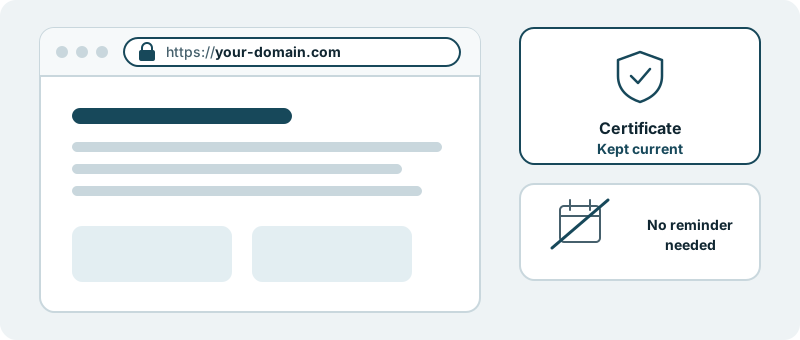
Your product lives on your own domain, and visitors reach it over HTTPS. The certificate is kept current, and renewals happen without anyone setting a reminder.
What you get
An address that belongs to your brand, and one less thing to keep in your head.
Most leaders have lived through the version of this that goes wrong. A certificate lapses on a quiet weekend. A browser starts warning visitors away from a page that worked on Friday. Someone digs through old emails to find out who set it up, which account it sits in and who was meant to renew it. Nothing about the product changed, yet it looks broken to everyone who arrives.
This ability takes that worry off your list. Three things follow for you.
Your name in the address bar. Your users come to your domain, not to a borrowed address with someone else’s name in it. Links you share, links in your emails and links your customers bookmark all point to an address that carries your brand.
HTTPS as the starting point. Visitors reach your product over an encrypted connection, the padlock is there, and the browser has no reason to warn them off. For a technical leader, that is one fewer item on the launch checklist. For a product leader, it is one fewer reason for a first visit to end at a warning screen.
Renewals nobody has to remember. The certificate is kept current without anyone on your side owning a reminder for it. There is no calendar entry to hand over when someone changes roles, and no single person whose holiday becomes a risk.
What it looks like in practice
Picture the week your product goes live. You pick the address you want your users to see, and that is where they find it, over HTTPS. When a renewal comes round, nobody on your team has to act on it, and the time that would have gone into chasing it goes into the product instead.
For you, the difference is mostly in what nobody has to do. No reminder to own, no account to dig out, no one asking who was meant to handle the renewal.
What it is not
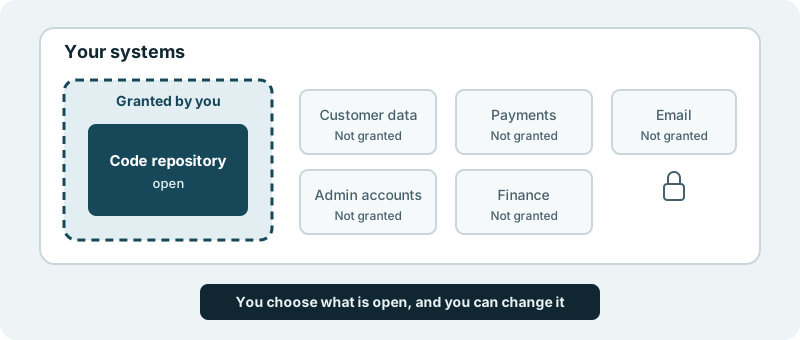
It is not a promise about what your users see on that domain. What goes live there is still your decision. You decide what ships. Nothing reaches your users without your approval. This ability keeps the address itself working, so your attention can stay on the big lines of the product.
Start with one product on your own domain, and let the certificate be the thing nobody needs to remember.